The End of Slavery
The Abolition of Slavery
Enslaved people never accepted their condition, and from the very beginning, there were uprisings and revolts. In the French colony of Saint-Domingue, a major revolt broke out in 1791. Despite harsh repression by Napoleonic troops sent to the island, the rebels succeeded in gaining independence in 1804 — giving birth to Haiti, the first state free of slaves.
Haiti became a powerful example for many communities subjected to slavery, and plantation revolts became increasingly frequent.
Date of emancipation of enslaved people in various countries
- 1793 Santo Domingo
- 1794 French Republic (slavery was reinstated in 1802 and definitively abolished in 1848)
- 1804 Haiti
- 1823 Chile
- 1824 Costa Rica, Honduras, Panama, El Salvador, Guatemala
- 1826 Bolivia
- 1829 Mexico
- 1833 United Kingdom
- 1838 Canada
- 1838 Colonial India
- 1838 Nicaragua
- 1842 Uruguay
- 1846 Tunis
- 1848 France
- 1851 Colombia
- 1853 Argentina
- 1854 Venezuela
- 1855 Peru
- 1865 United States of America
- 1869 Portugal
- 1873 Puerto Rico
- 1876 Turkey
- 1886 Cuba
- 1888 Brazil
- 1896 Madagascar
- 1923 Ethiopia, Afghanistan
- 1924 Iraq
- 1963 Saudi Arabia
- 1981 Mauritania
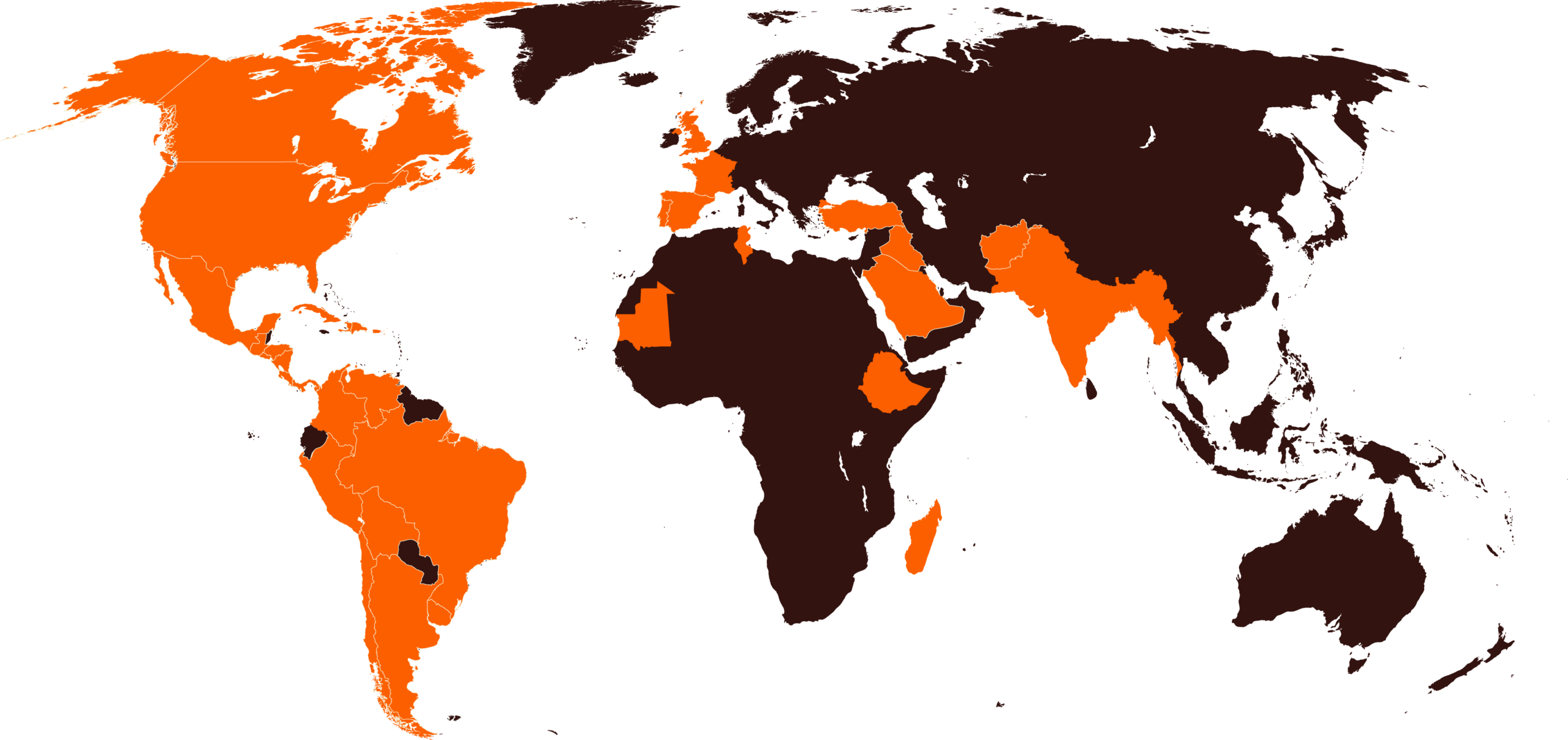
In 1833, the United Kingdom decreed the end of slavery; France followed in 1848, and the United States in 1865. In Spain, no abolition law was ever passed for the peninsular territory or for the Balearic and Canary Islands.
In 1873, during the First Republic, under the presidency of the Catalan Estanislau Figueras, slavery was abolished in Puerto Rico. In Cuba, where Spain had far greater interests, it was not abolished until 1886 — making it the second-to-last territory in the Americas to do so; only Brazil remained, which abolished slavery in 1888.
Gentlemen:
We who have the honour of presenting ourselves before you with these words belong to a class of men whom you have, until now, refused to recognise as your equals — and whom you have covered in disgrace (…).We may not speak in grand terms, but we will show you — and the world — the justice of our cause. We are the very ones you call your slaves, and we now claim the rights to which all men may aspire (…).Under the blows of your barbaric whip, we have amassed for you the wealth you enjoy in this colony; humanity has borne the savagery with which you treat men like yourselves — if men — over whom you hold no right other than that of being stronger and more brutal than us. You have trafficked in slaves, sold men in exchange for horses (…), and our lives depend entirely on your whims (…). Yes, we are Black — that is true. But tell us, gentlemen, you who consider yourselves wise: what law says that the Black man must belong to the white man? You will not be able to show us where such a law exists — unless it is in your imagination, always eager to invent new fantasies so long as they benefit you. Yes, gentlemen, we are as free as you are. It is only because of your greed and our ignorance that slavery still exists. We find no legitimate right that you hold over us, nor anything that could prove such a right (…). We are your equals by natural law. And if nature delights in giving the human race a diversity of colours, then it is no crime to have been born Black, and no merit to have been born white.”
Letter written by Biassou, Jean-François, and Toussaint L’Ouverture, leaders of the Haitian Revolution, addressed to the French National Assembly in 1792.
«El tráfico, Señor, de esclavos, no solo es opuesto a la pureza y liberalidad de los sentimientos de la nación española, sino al espíritu de su religión. Comerciar con la sangre de nuestros hermanos es horrendo, es atroz, es inhumano, y no puede el Congreso nacional vacilar un momento entre comprometer sus sublimes principios o el interés de algunos particulares».
«The slave trade, Sir, is not only contrary to the purity and liberality of the sentiments of the Spanish nation, but also to the spirit of its religion. To trade in the blood of our brothers is horrid, atrocious, inhuman — and the national Congress cannot hesitate for a moment between compromising its lofty principles or protecting the interests of a few individuals.»
Excerpt from the speech by the deputy for Asturias, Agustín de Argüelles, at the Cortes of Cádiz. Diario de las Sesiones de Cortes, 2 April 1811, p. 812. Argüelles was the author of one of the two abolitionist proposals debated in Cádiz, though neither succeeded.
Revolts on the plantations
In the French colony of Saint-Domingue, enslaved people rose up in 1791. Despite repression by Napoleonic troops sent to the island, they achieved independence in 1804 and Haiti, a slave-free state, was born. Haiti was an example for many enslaved populations, and revolts on plantations became frequent.
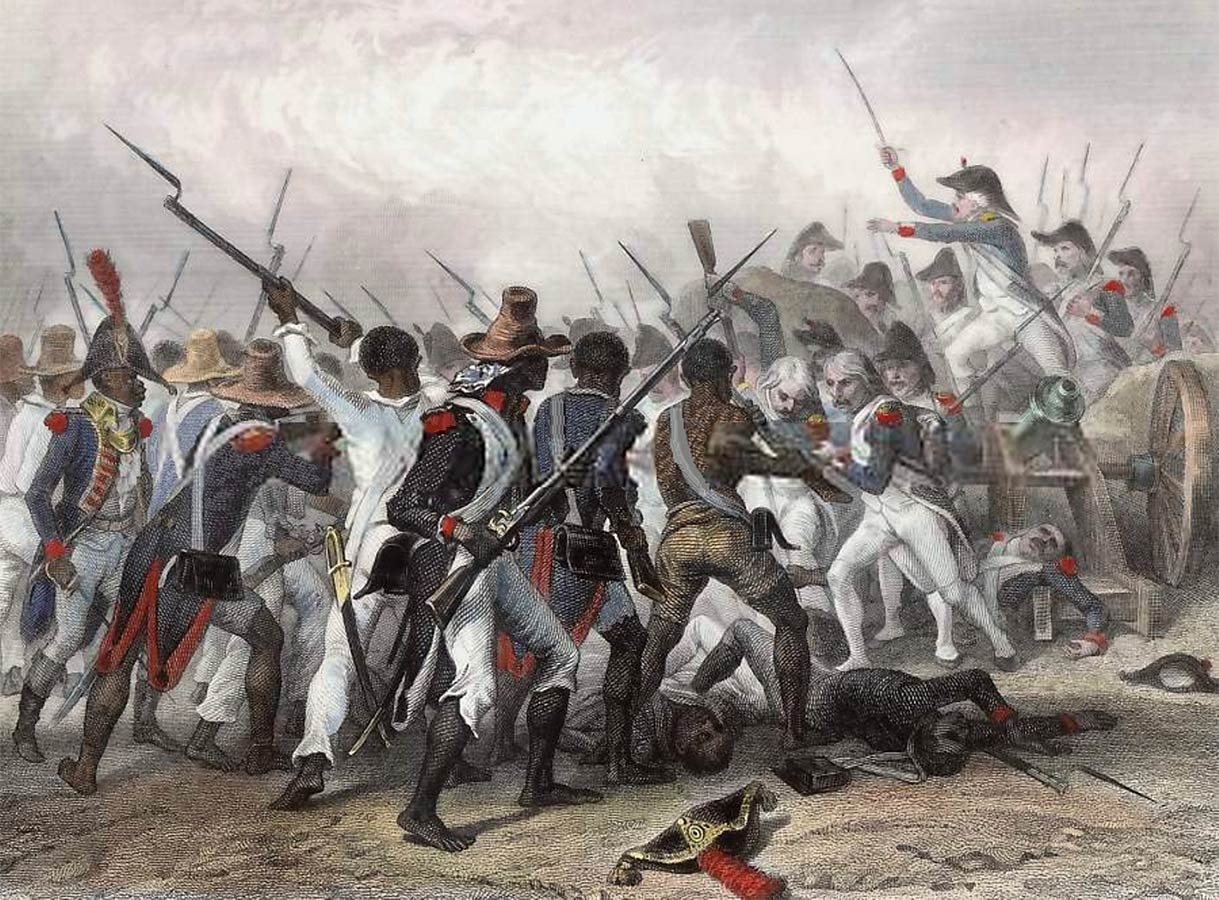
Attack and take of the Crête-à-Pierrot (4 – 24 March 24, 1802).
Original illustration by Auguste Raffet, engraving by Ernst Hébert (1839)
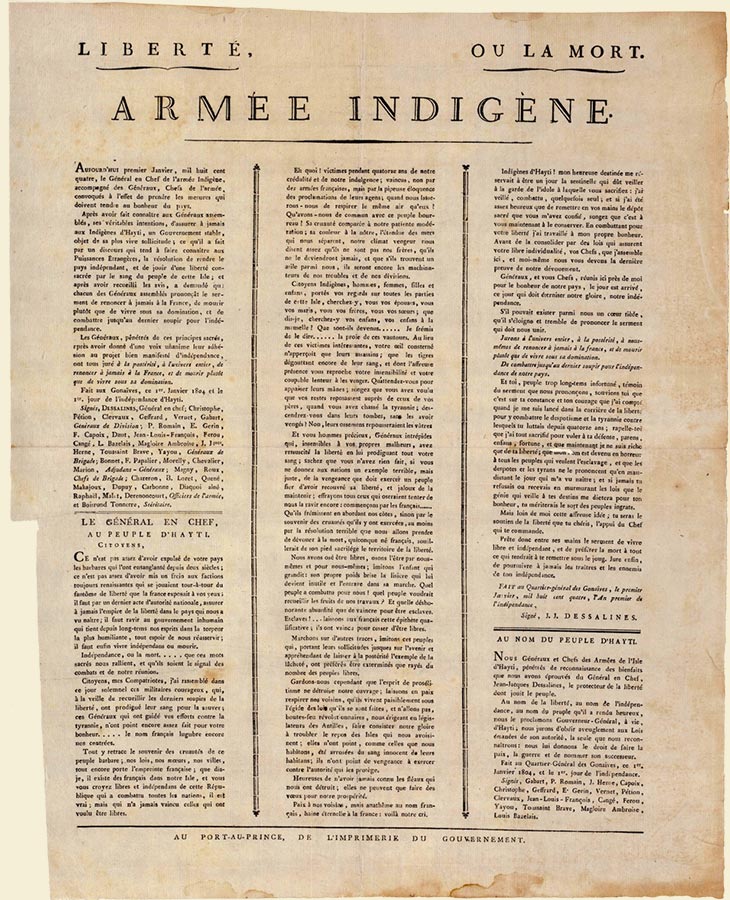
Haitian Declaration of Independence
National Archives, U.K.
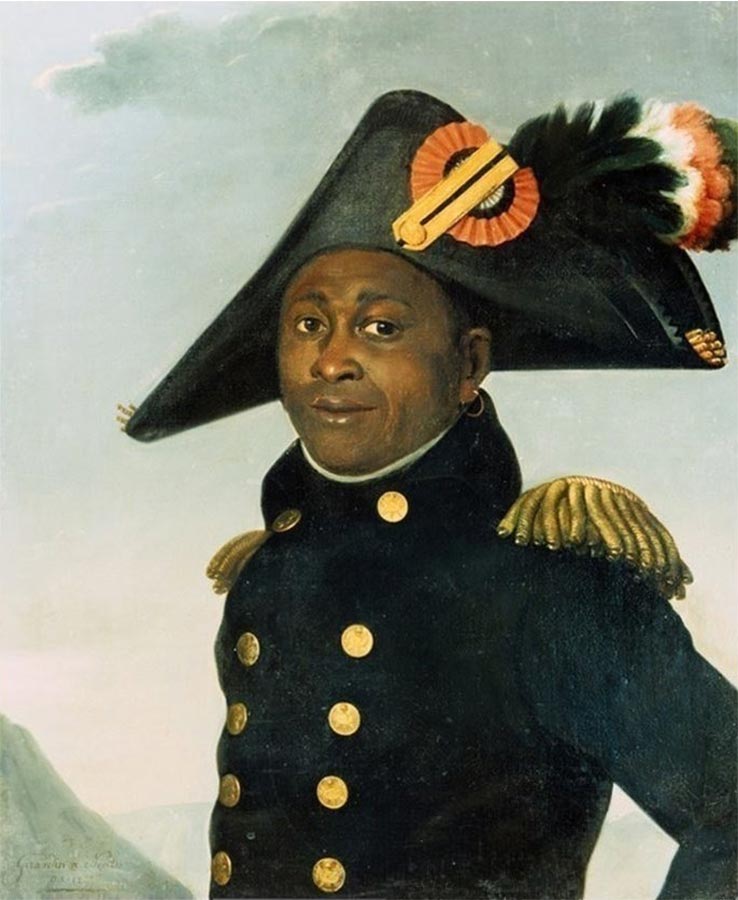
A portrait of Toussaint Louverture
Oil on canvas by Alexandre-François-Louis, Count of Girardin (1804–1805)
Pushkin State Museum of Fine Arts, Moscow.
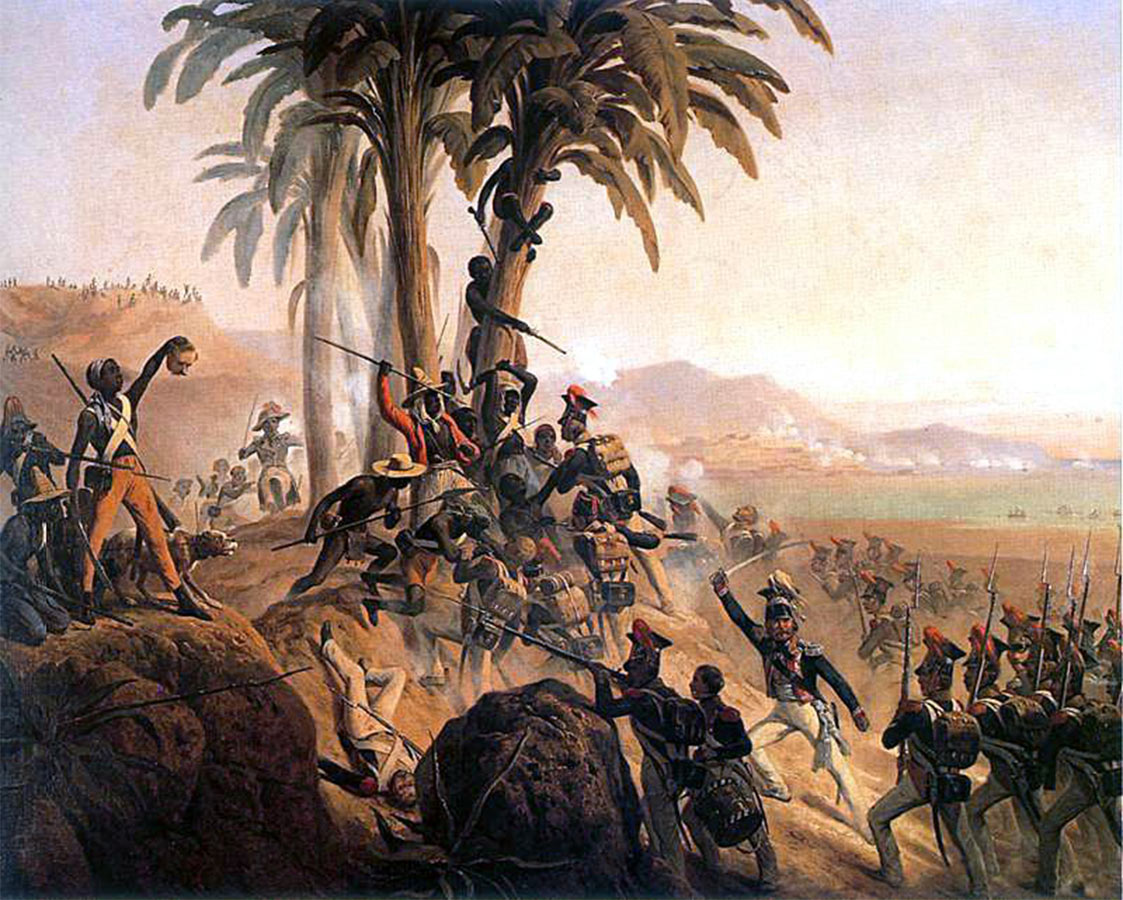
Bitwa na San Domingo
(Battle of Santo Domingo)
Oil on canvas by January Suchodolski (1797–1875)
Army Museum, Poland