The Spaniards’ Big Business in Cuba
The ingenios were colonial estates — mostly owned by Spaniards or their descendants — where sugarcane was milled and processed into sugar or rum. In 1860, there were 1,365 ingenios in Cuba, and every single one operated using enslaved labour. The sugar they produced accounted for 82% of Cuba’s exports.
Some Catalan owners of sugarcane plantations worked using enslaved labour included Sebastià Plaja Vidal, Joan Anglada Carreras, Joan Forgas Bayó, and Jeroni Rabassa in Puerto Rico; and in Cuba, Isidre Sicart Soler, Josep Carbó Martinell, the brothers Pau Lluís and Tomàs Ribalta Serra, and Joaquim Fàbregas, among others. Other slave-owning landowners who lived in Barcelona included Josep P. Taltavull Garcia (born in Maó), Agustín Goytisolo Lezarzaburu (born in Lekeitio), and the brothers Antonio and Claudio López López (born in Comillas).
The system of enslaved labour gave rise to a society in which the owners of the ingenios lived in extreme opulence, while the enslaved people survived in misery — with no rights, and forced to dedicate their lives entirely to production.
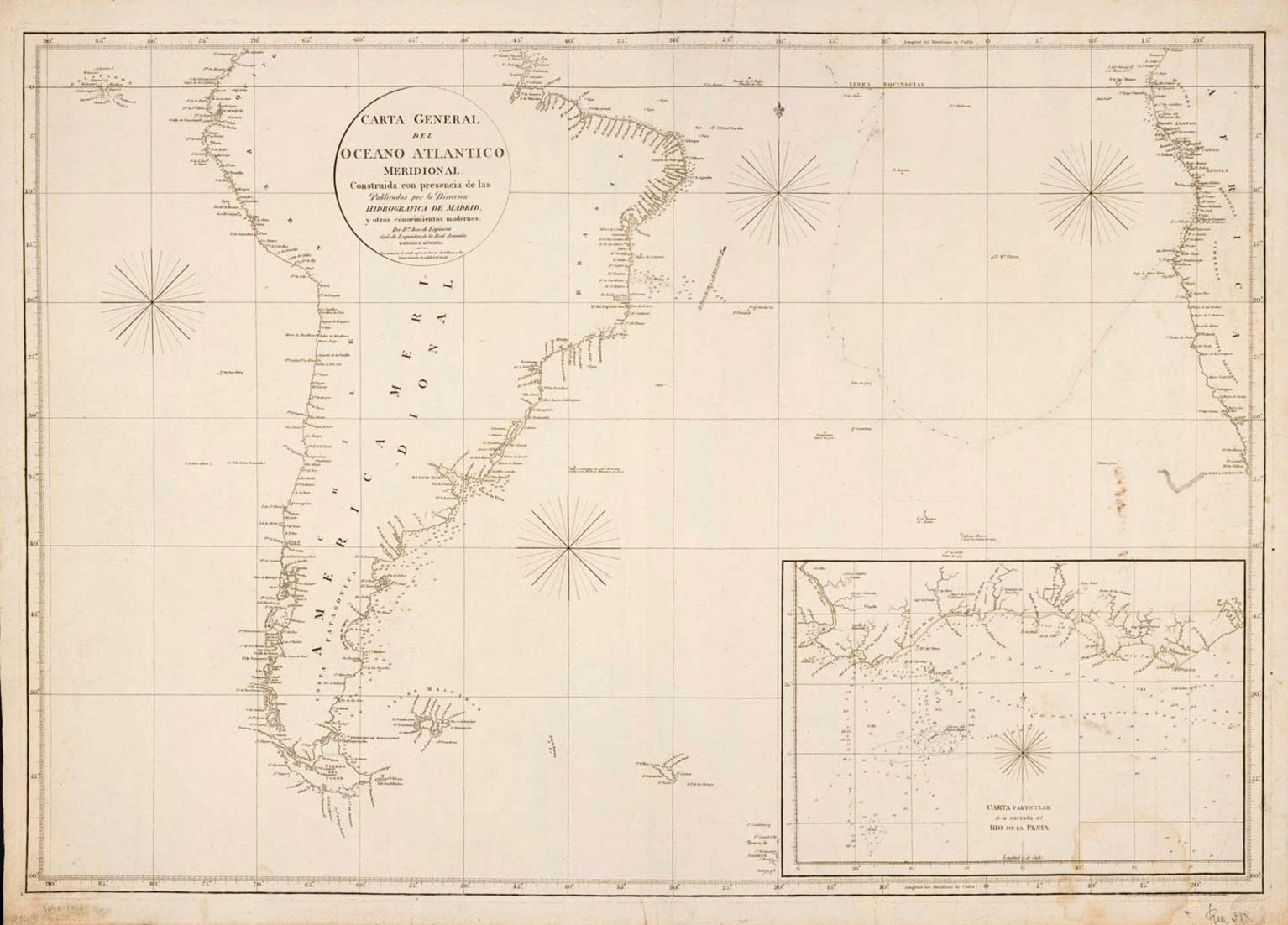
General chart of the southern Atlantic Ocean from 1810
Engraved by Aaron Arrowsmith, drawn by Juan José Martínez de Espinosa, engineer in the Spanish navy, and published by the Hydrographic Office.
MMB
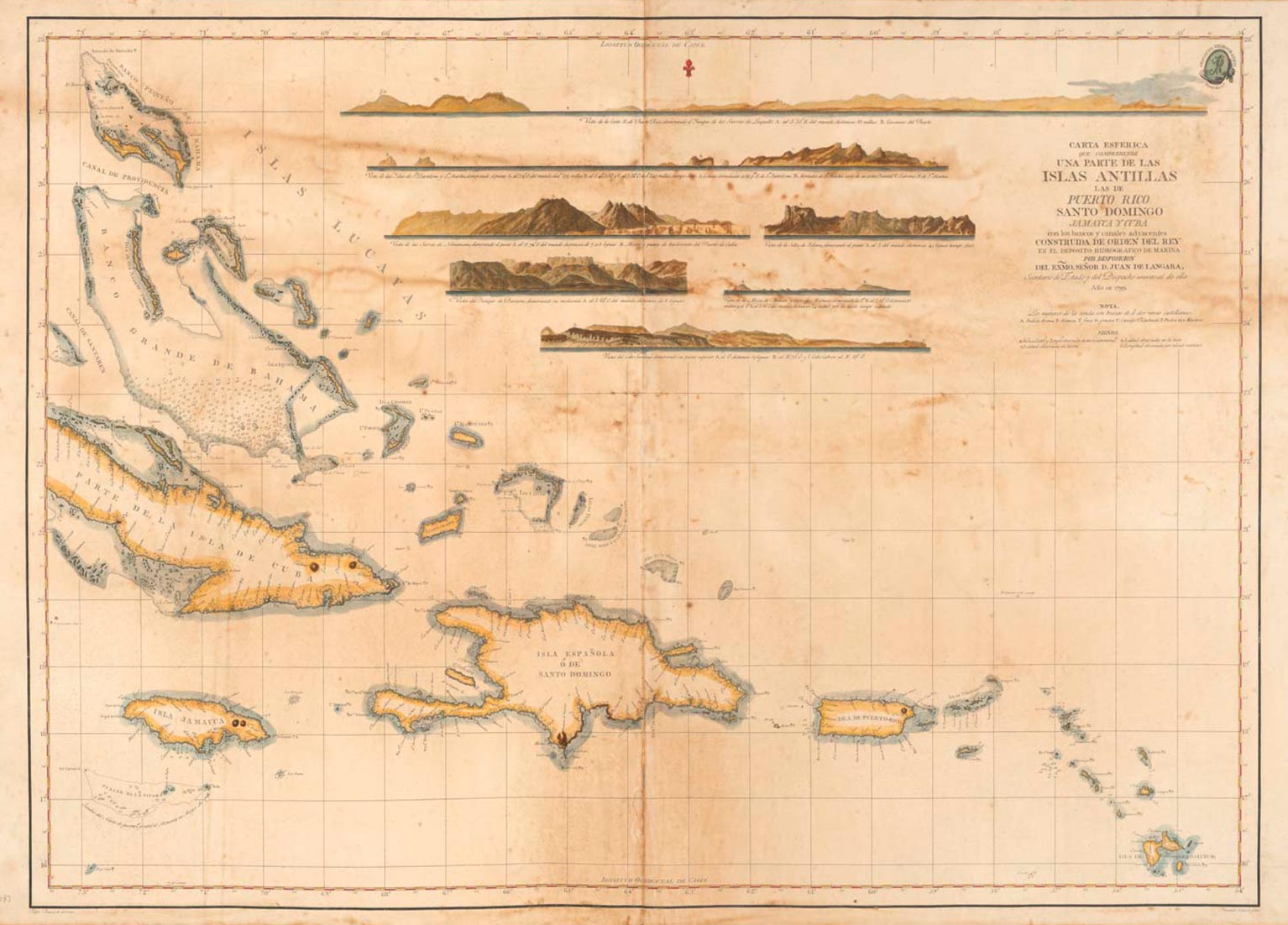
Spherical chart comprising part of the Antilles islands, Puerto Rico, Santo Domingo, Jamaica and Cuba with adjacent sandbanks and channels (1799).
Published by the Hydrographic Office.
MMB
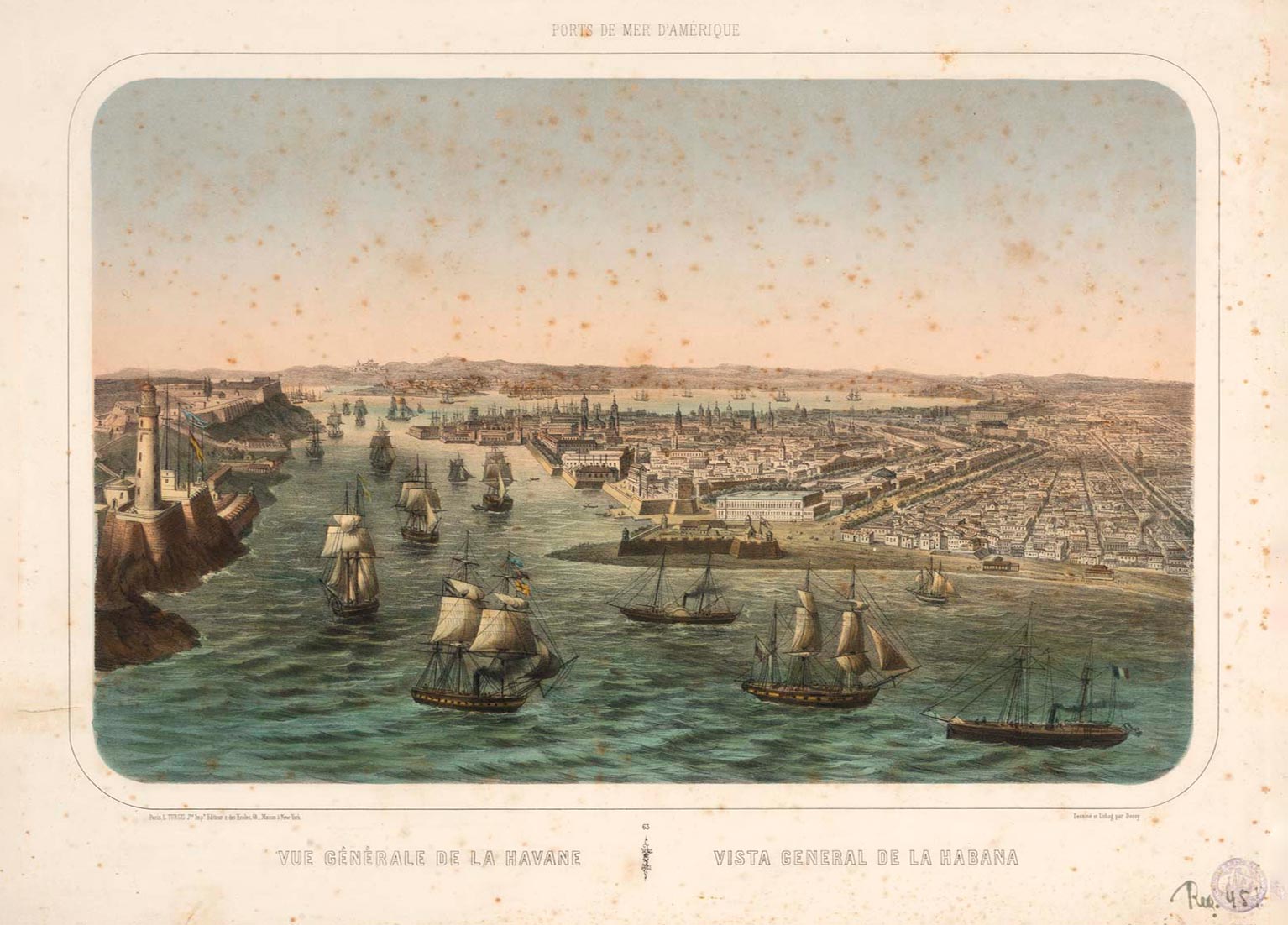
Vue générale de la Havane / Vista general de la Habana
(General view of Havana)
Lithograph by Isidore-Laurent Déroy, published by Louis Auguste Turgis (1818–1894).
MMB
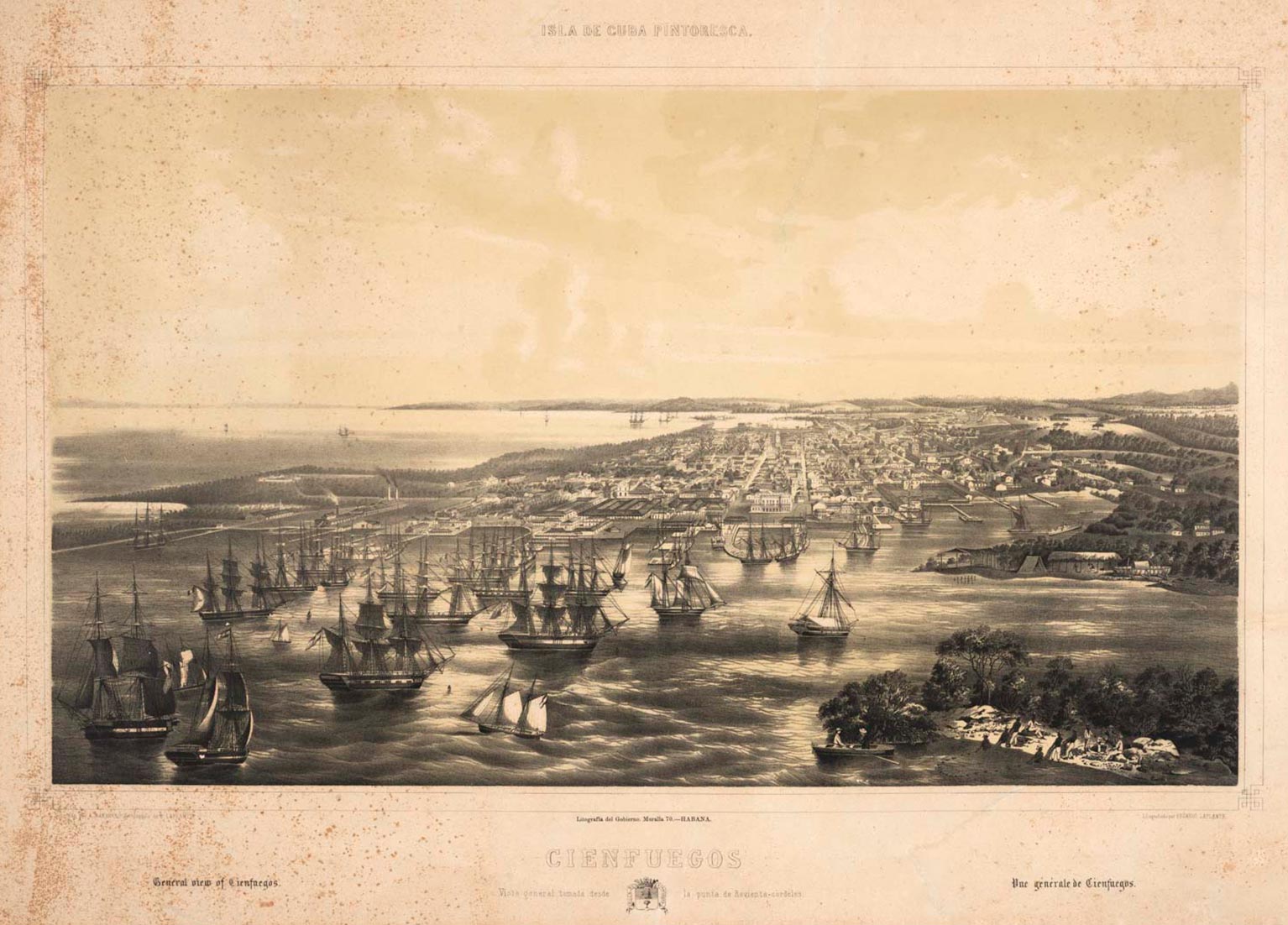
Isla de Cuba Pintoresca. Cienfuegos. Vista General desde punta de Revienta – cordeles / General View of Cienfuegos / Vue générale de Cienfuegos.
Lithograph drawn by Leonardo Barañano and engraved by Édouard Laplante, both authors of the work Isla de Cuba Pintoresca (1856)
MMB
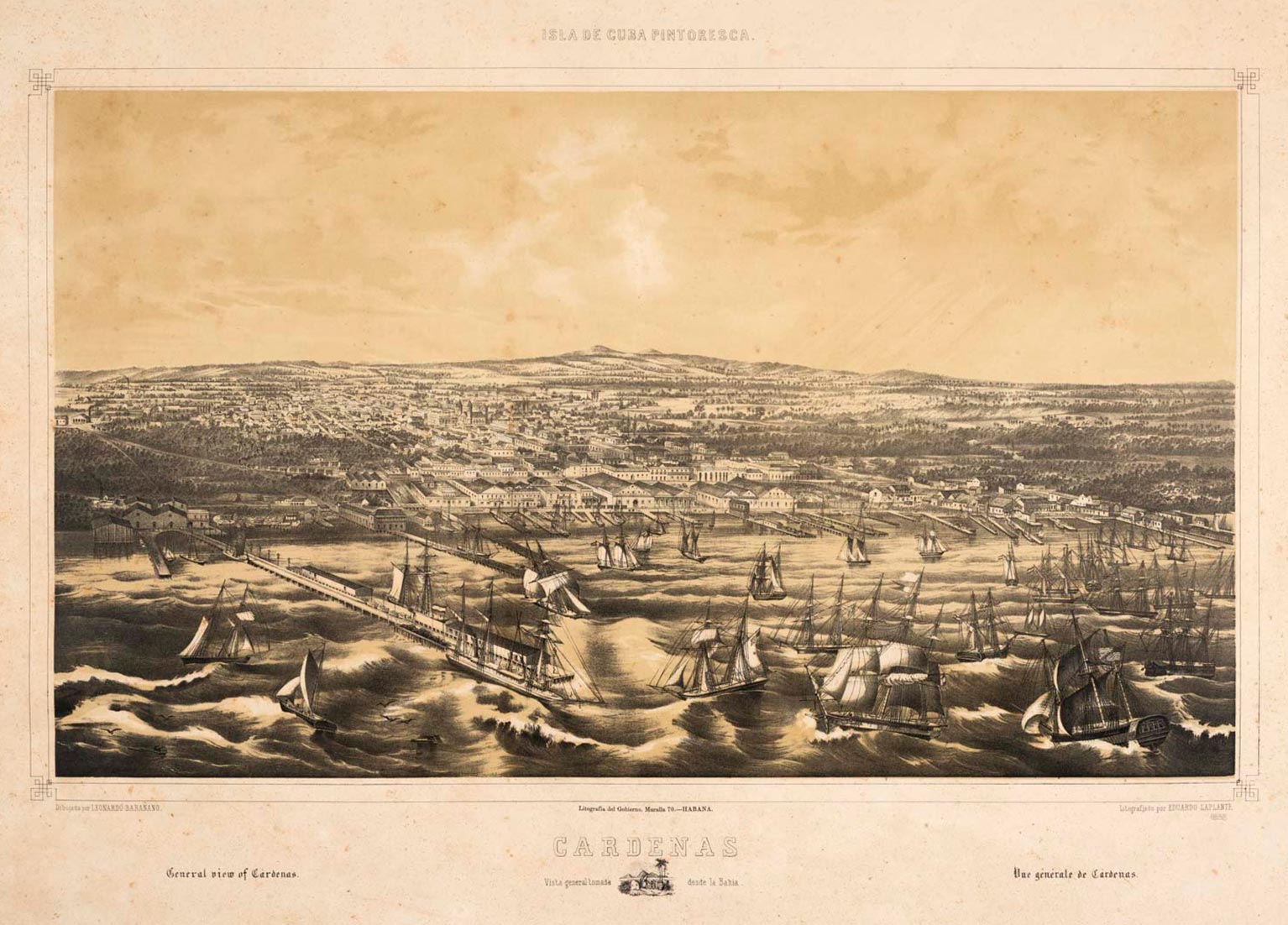
Cárdenas. Vista General tomada desde la Bahía.
(Cárdenas. General view taken from the bay)
Lithograph drawn by Leonardo Barañano and engraved by Édouard Laplante, both authors of the work Isla de Cuba Pintoresca (1856)
MMB
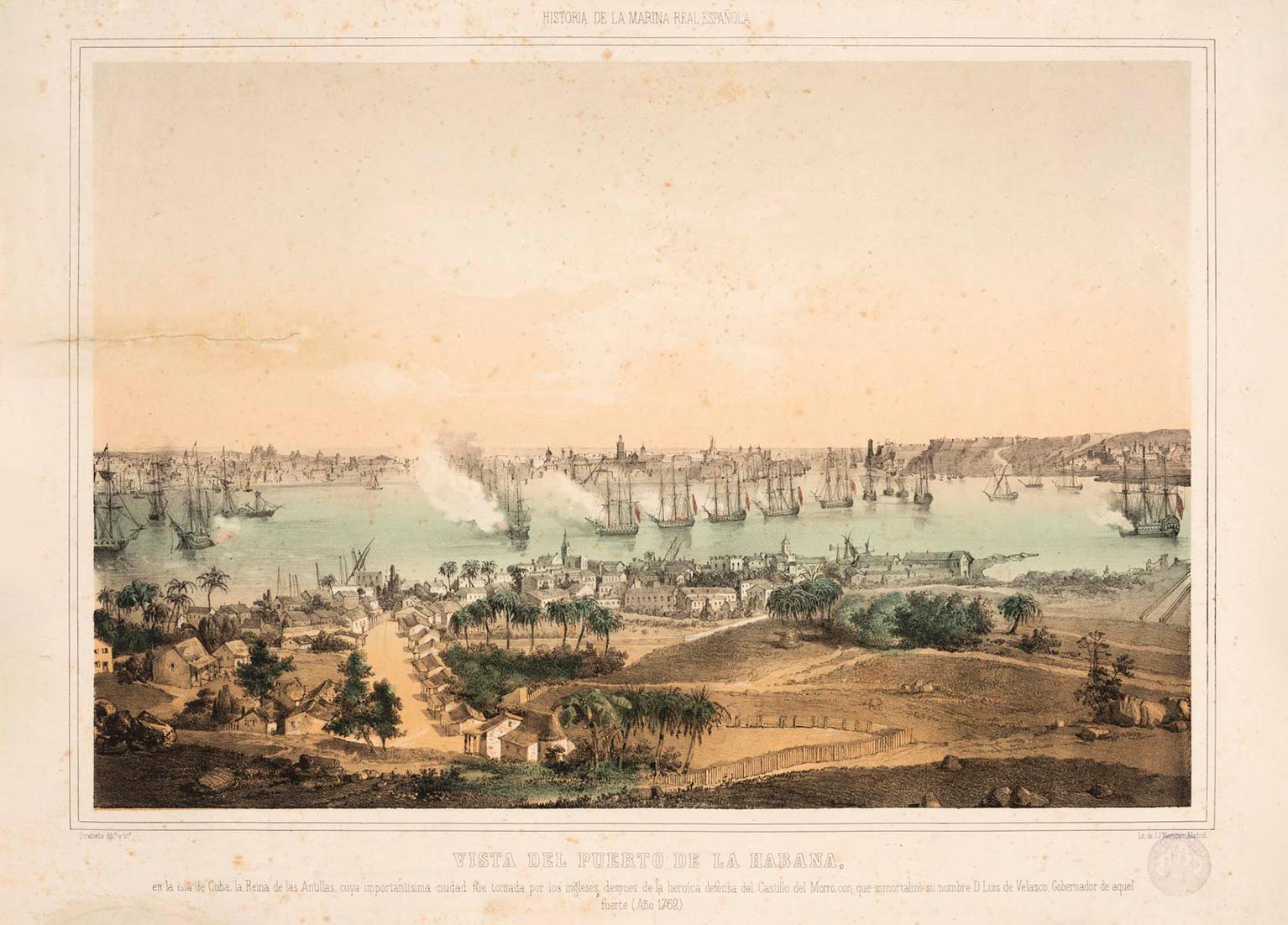
Historia de la Marina Real Española. Vista del puerto de la Habana en la Isla de Cuba, la Reina de las Antillas, cuya importantísima ciudad fue tomada por los ingleses después de la heroica defensa del castillo del Morro, con que inmortalizó su nombre D. Luis de Velasco, gobernador de aquel fuerte. (año 1762)
(History of the Spanish Royal Navy. View of the port of Havana on the island of Cuba, Queen of the Antilles, whose important city was taken by the English after the heroic defence of Morro Castle, immortalising the name of Luis de Velasco, governor of that fort. (1762))
Lithograph by J.J. Martínez based on a drawing by Vicente Urrabieta y Ortiz (ca. 1854)
MMB
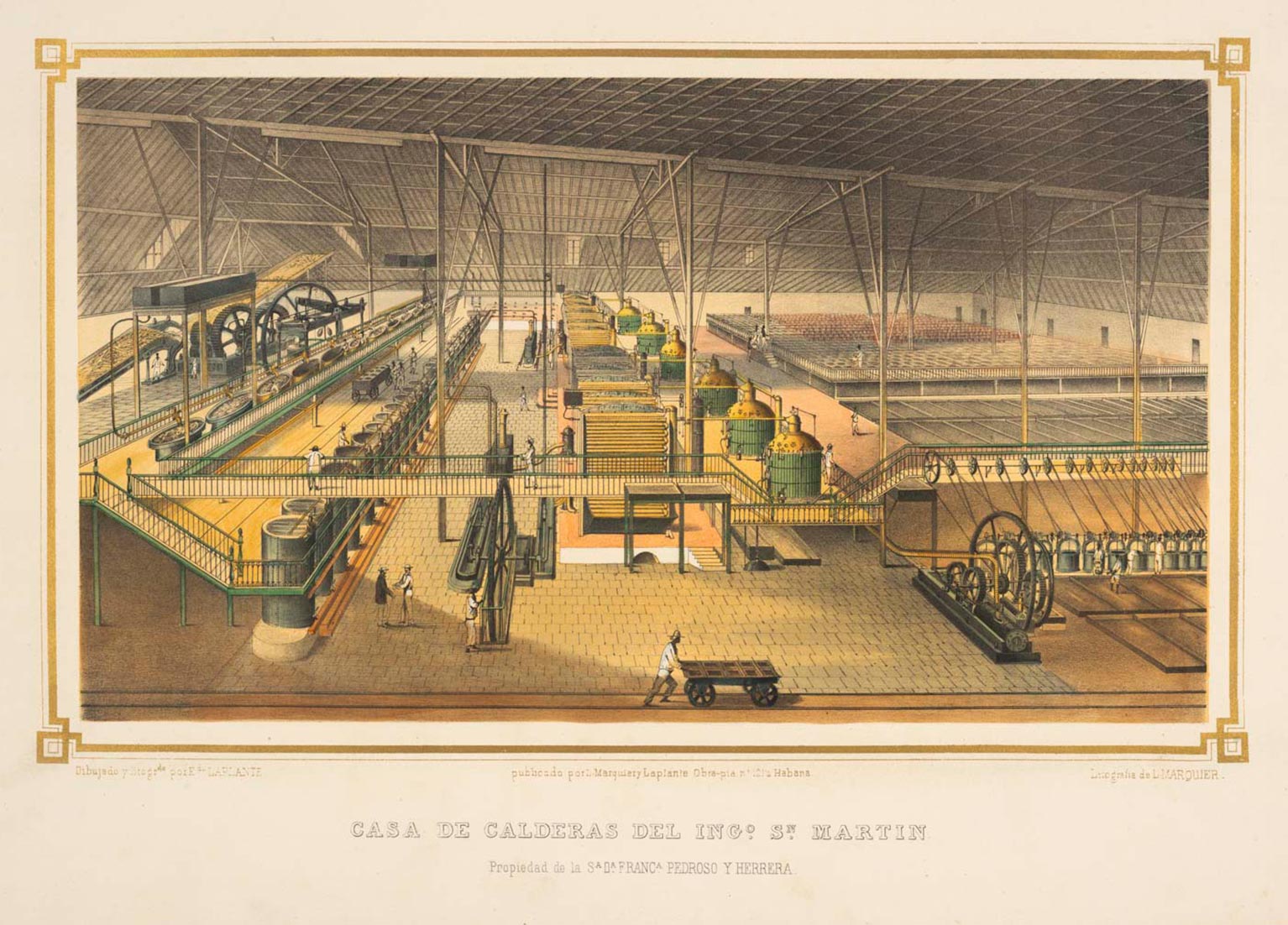
Casa de calderas del ingenio San Martín, propiedad de la Sra. Dña. Francisca Pedroso Herrera
(Boiler house at the San Martín sugar mill, owned by Mrs Francisca Pedroso Herrera)
Drawn and lithographed by Édouard Laplante. Lithograph by L. Marquier.
Illustration from the work Los ingenios: colección de vistas de los principales ingenios de sucre de la isla de Cuba (The sugar mills: collection of views of the main sugar mills on the island of Cuba), by Justo G. Cantero (Havana, 1857).
Private collection of Joan Alemany.
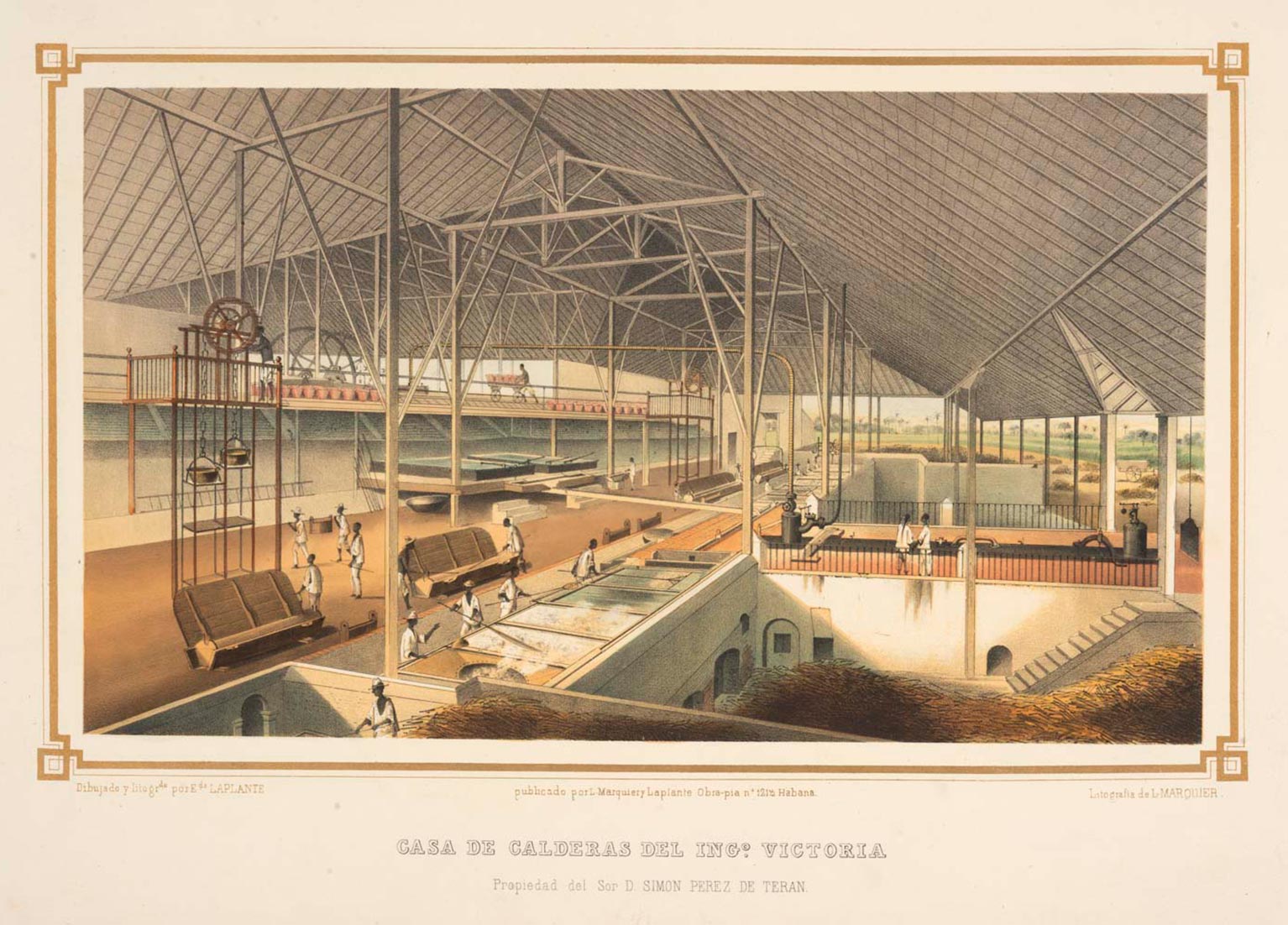
Casa de calderas del ingenio Victoria, propiedad de Don Simón Pérez de Teran
(Boiler house of the Victoria sugar mill, owned by Don Simón Pérez de Teran)
Drawn and lithographed by Édouard Laplante. Lithograph by L. Marquier.
Illustration from the work Los ingenios: colección de vistas de los principales ingenios de sucre de la isla de Cuba (The sugar mills: collection of views of the main sugar mills on the island of Cuba), by Justo G. Cantero (Havana, 1857).
Private collection of Joan Alemany.
Ingenio Flor de Cuba
Owned by the Arrieta family, it was founded in 1838 near Matanzas. It was one of the most important of its time.
In the middle of the 19th century, Cuba was the main sugar producer in the world and throughout the island there was a proliferation of the so-called ‘ingenios’, colonial haciendas that operated with slave labour, destined for the production of sugar, honey and sugar cane brandy. They integrated agricultural spaces, industrial buildings, barracks and complementary service buildings.
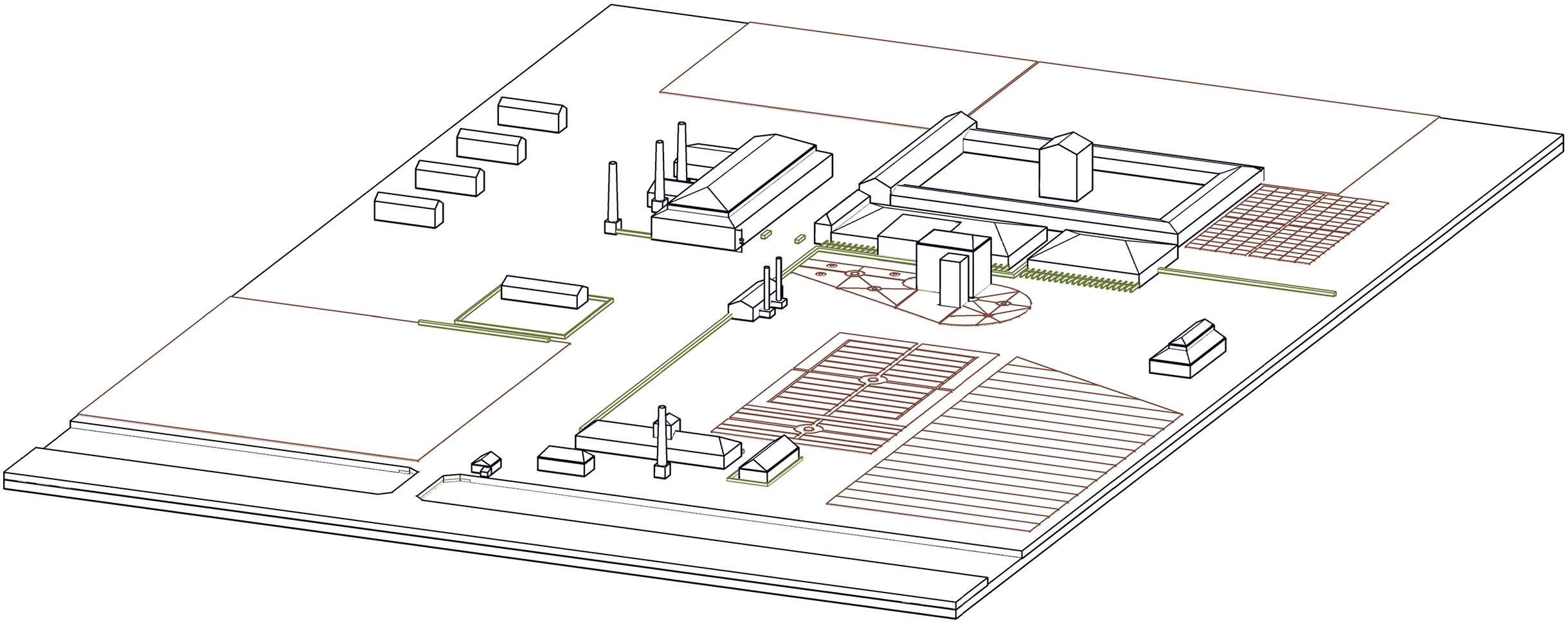
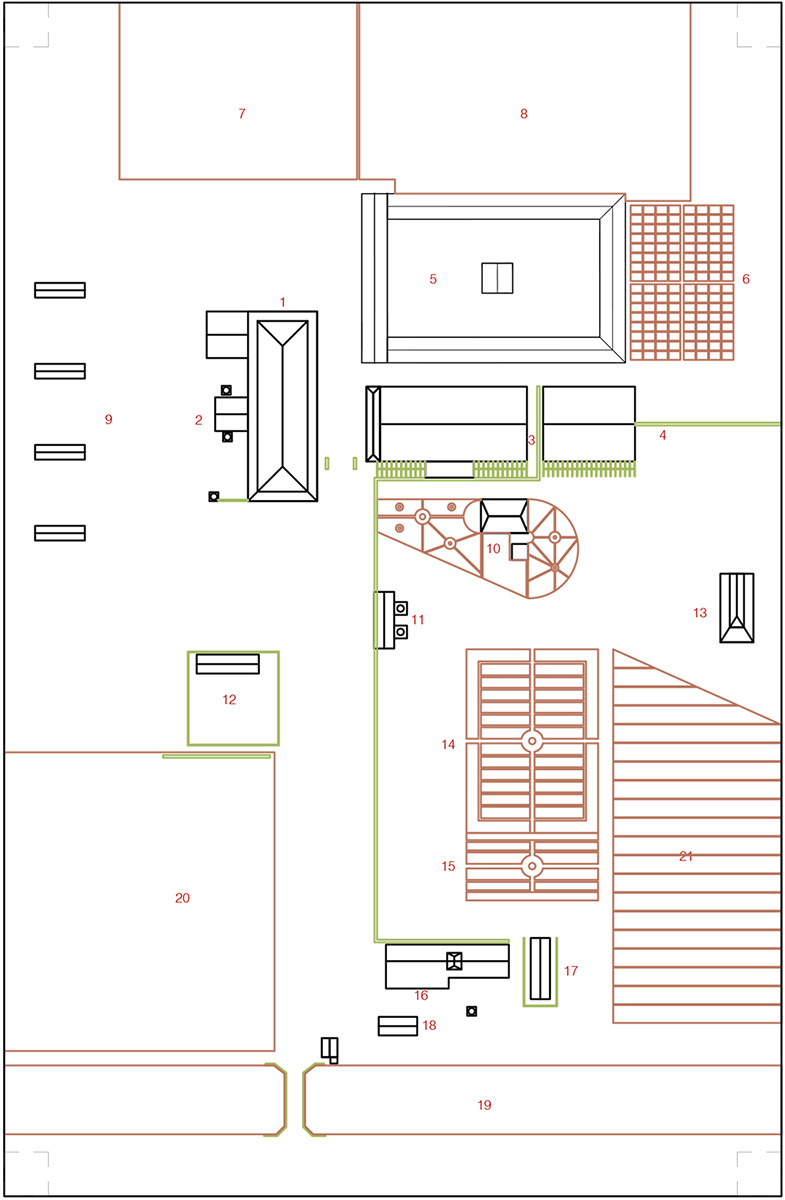
1. Ingenio house
It housed the mill for grinding the sugar cane, from which two products were produced:
• Bagasse (bagazo): sugar cane chips
• The syrup (guarapo)
2. Boiler house
Used for the clarification of syrup, made by evaporation in boilers
3. Purging houses
Syrup was purged to separate the honeys – or molasses – from the sugar, either by draining or, later, by centrifuging
4. Clay house
The process ends with the crystallisation of sugar in moulds, first made of clay and then of metal
5. Barracks
It was the living quarters of the enslaved people. It consisted of a building with four wings, which made it possible to separate people according to sex. The barrack upper floor housed the hired staff, mainly of Chinese origin. The well and the communal kitchen were in the central courtyard
6. Pig pen
They were bred to provide food
7. Oxen pen
They were used for agricultural work
8. Grove
9. Bagasse house
Used to store bagasse, needed as fuel
10. Main house
It was the lodging of the owners
11. Cooker
It was connected to the purging house
12. Cavalry
13. Carpentry
14. Garden
15. Vegetable garden
Vegetables were produced for their own consumption
16. Alembic distillery
Place where the machinery was used to convert molasses into distilled alcoholic beverage
17. Alembic tank warehouse
18. Alembic tank storage
19. Dam
20. New oxen pen
21. Orange tree grove
LIVING AND WORKING CONDITIONS IN THE SUGAR MILLS
The work process began with the cultivation of sugar cane, which was usually harvested manually with machetes and sickles. Once cut, the cane was transported to the mill, which could be powered by draught animals or, in more modern facilities, by hydraulic energy. The first juice from the cane, known as guarapo, was extracted and had to be refined several times to obtain other derivative products.
The purification of this molasses is called clarification. The juice was poured into boilers, where it was heated to manually remove the foam and impurities accumulated on the surface of the liquid. When finished, it was transferred to tanks, where it was cooked and concentrated through evaporation. This task was a slow process and required a great deal of attention to prevent the product from burning.
Next came crystallization, with the juice poured into molds (paines), where it cooled and sugar crystals began to form. These were classified, air-dried, and manually packaged.
A portion of the guarapo could be left to ferment in the open air and then distilled in stills to obtain spirits.
Enslaved people carried out all these tasks, which were characterised by their harshness and the demands of intense physical effort in conditions of extreme heat and humidity. They worked 10-hour days, which during harvest time could stretch to 16 or even 20 hours, with a couple of breaks during the day. Their meals contained high-calorie foods to ensure they had the strength to do the work, but this unbalanced diet often affected their health. The average life expectancy of these people did not exceed 15 years once they arrived at the plantations.
Not all enslaved people had the same rights and duties; there was a hierarchy determined by factors such as personal characteristics, skills or even origin, which influenced the roles they were assigned. Those assigned to sugar cane cultivation—the field slaves—were the most repressed and controlled, and the least valued; on the other hand, those who had specialised skills in other aspects of sugar cane processing enjoyed somewhat more favourable conditions. At the top of this pyramid were the sugar master, the distillery master and the foreman, who enjoyed some small benefits, such as having their own hut, receiving a little more food or a small amount of sugar and rum when production was finished.
Faced with these conditions, the enslaved people never gave up and devised various ways to resist and boycott the system: acts of sabotage against production—despite the strict surveillance and encouragement of denunciation by the owners of the mills—and attempts at revolt never ceased.
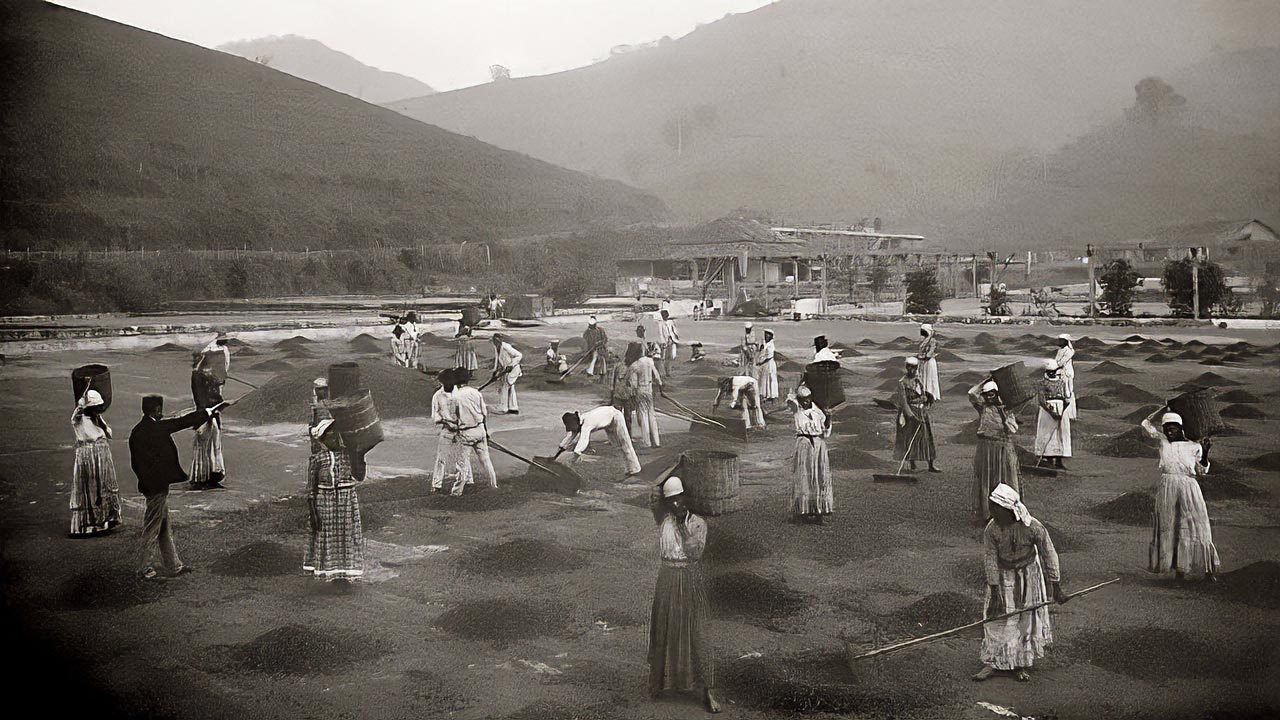
Slaves working on a coffee plantation in the Paraíba Valley, Brazil.
Photograph by Marc Ferrez (1882)
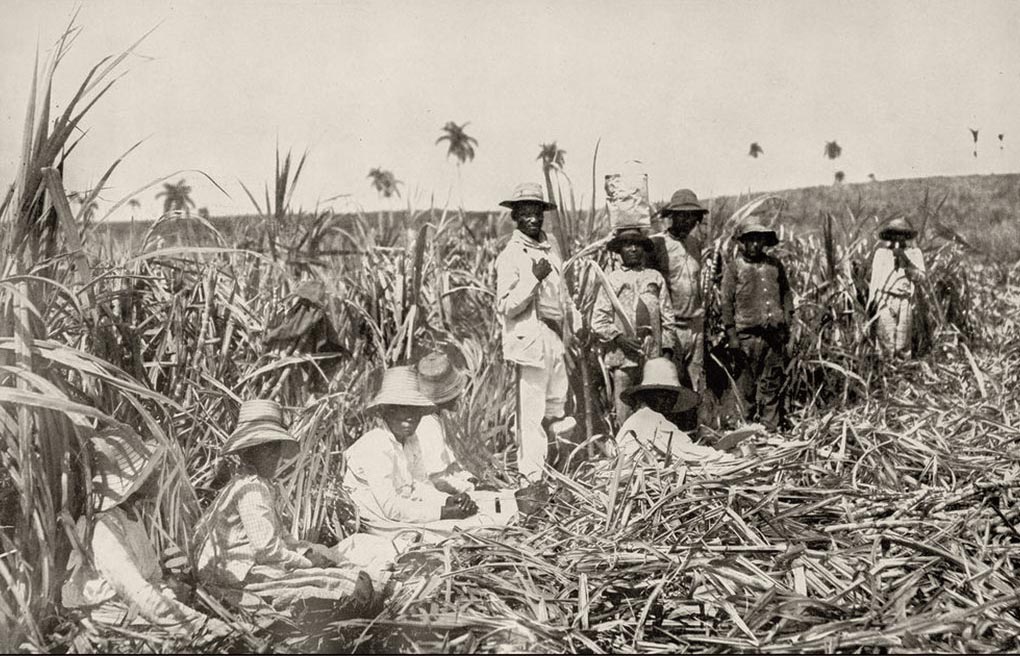
Sugar cane field, Cuba.
Photograph by unknown author from the late 19th century.
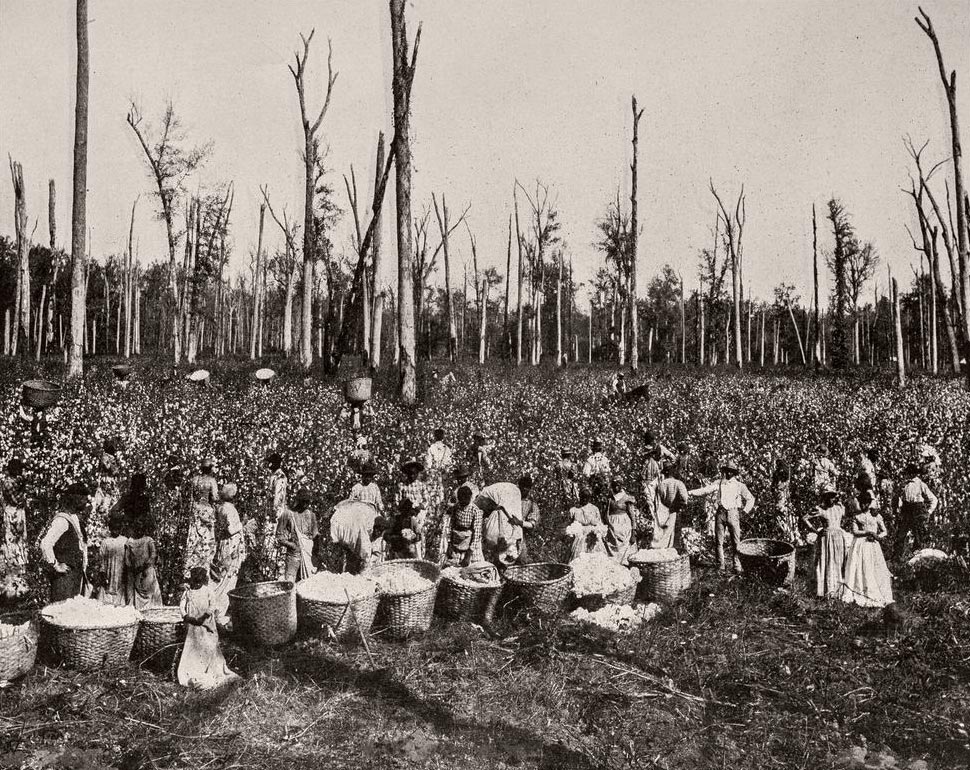
People working in a cotton field.
Photograph by unknown author from the late 19th century
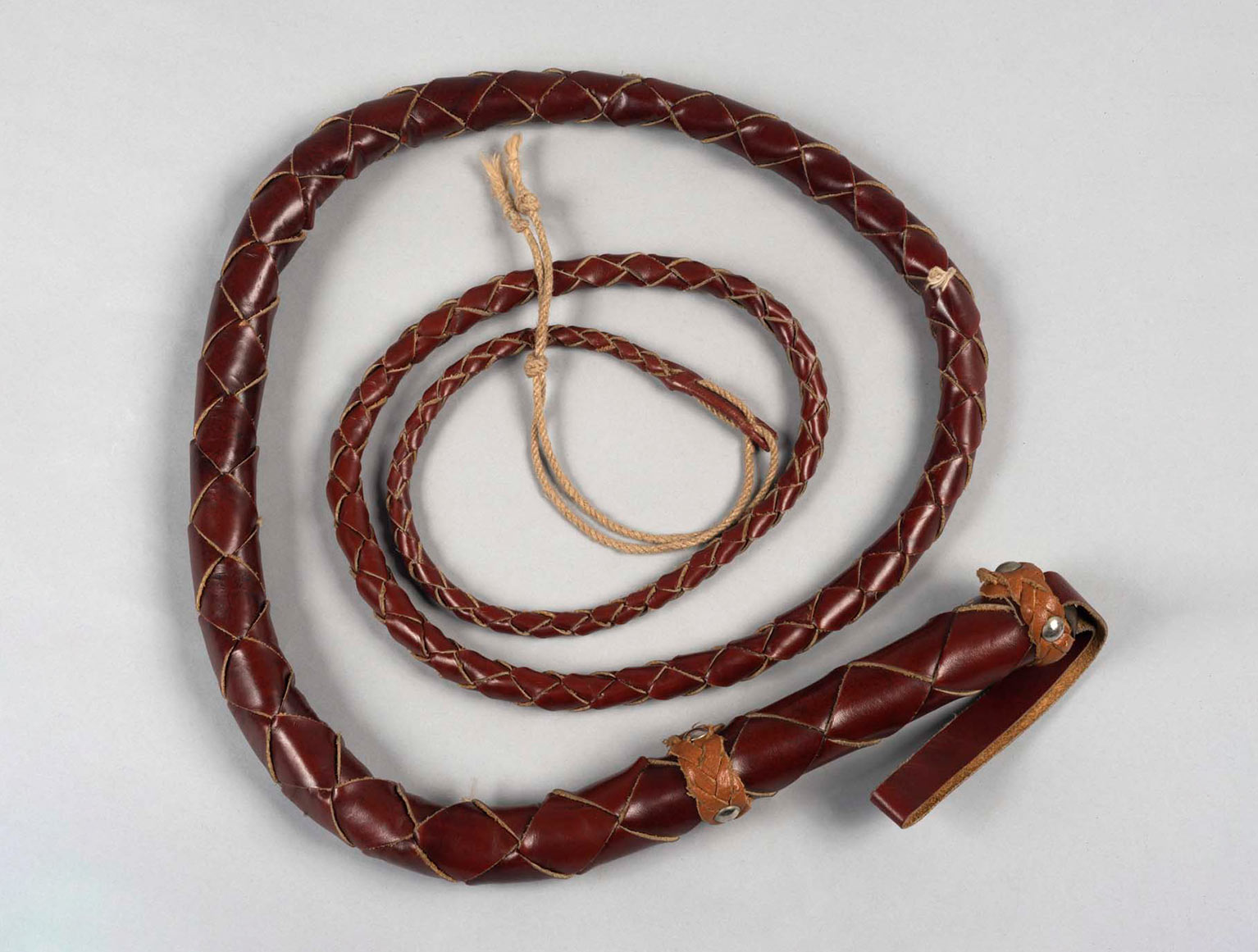
Whip
A leather weapon used to beat people or animals, commonly found on slave ships and sugar mills.
19th century
Javier Aznar’s private collection
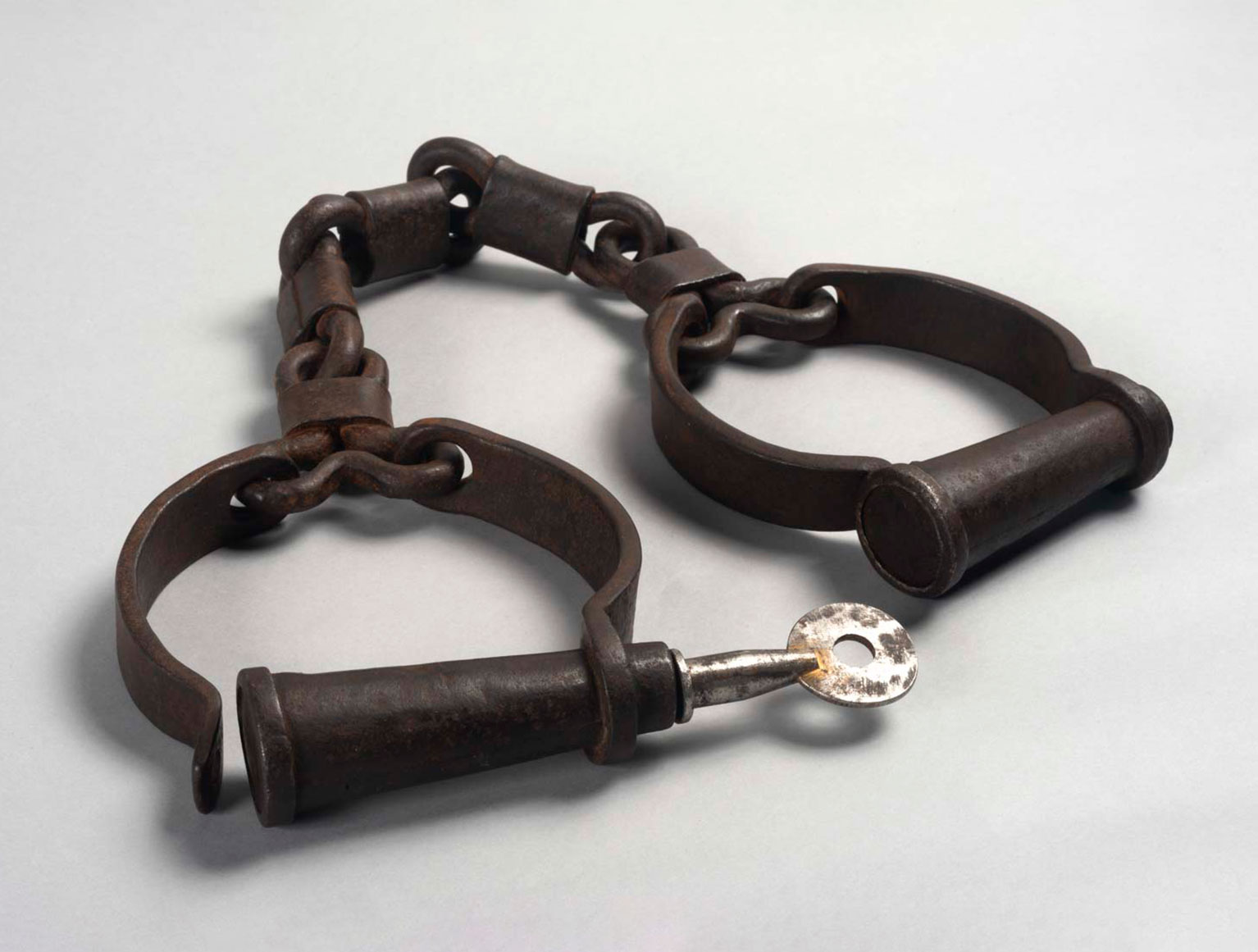
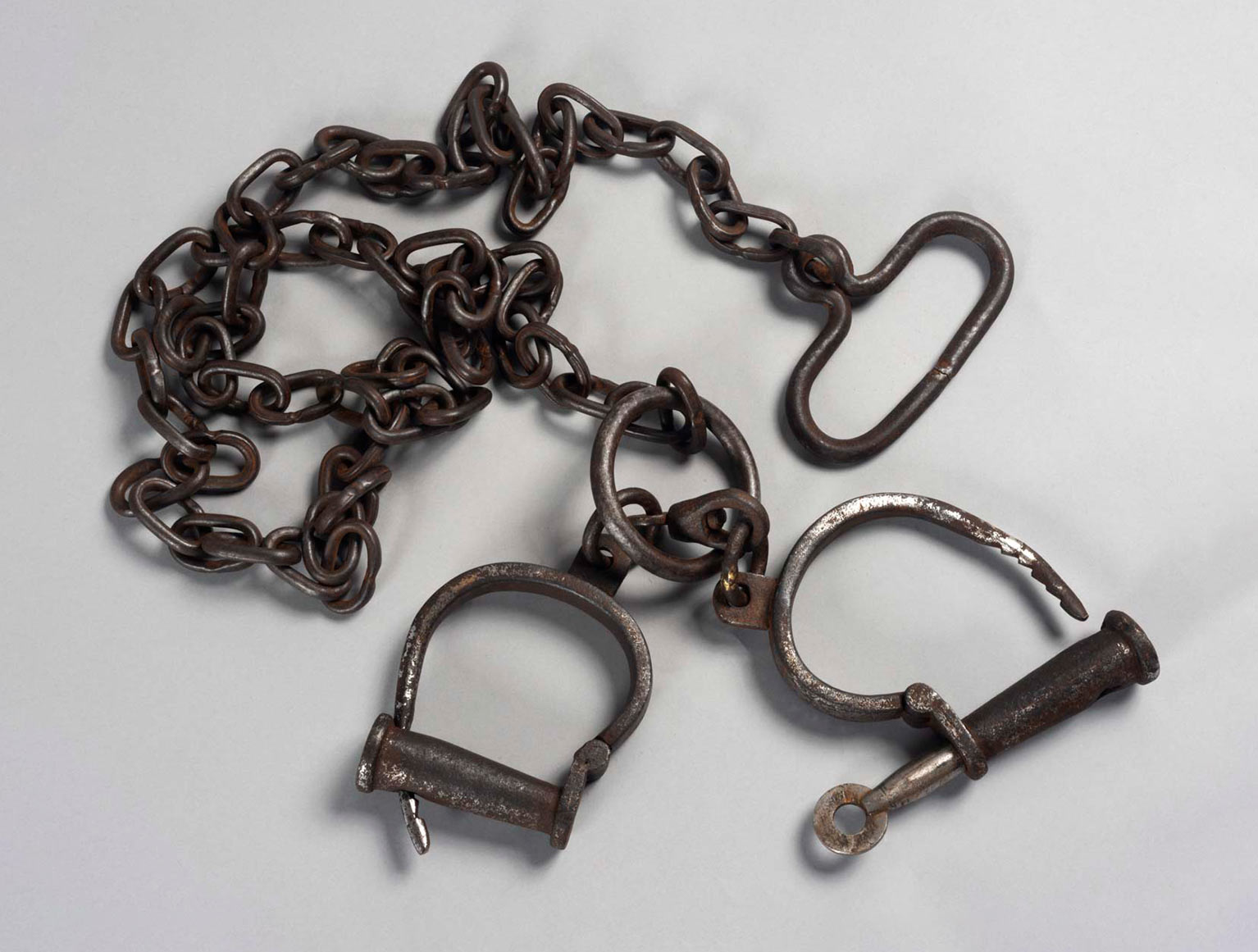
Shackles
They were used to chain a person by the ankles to some fixed location and prevent free movement.
19th century
MMB