The Capture
12.5 million People enslaved
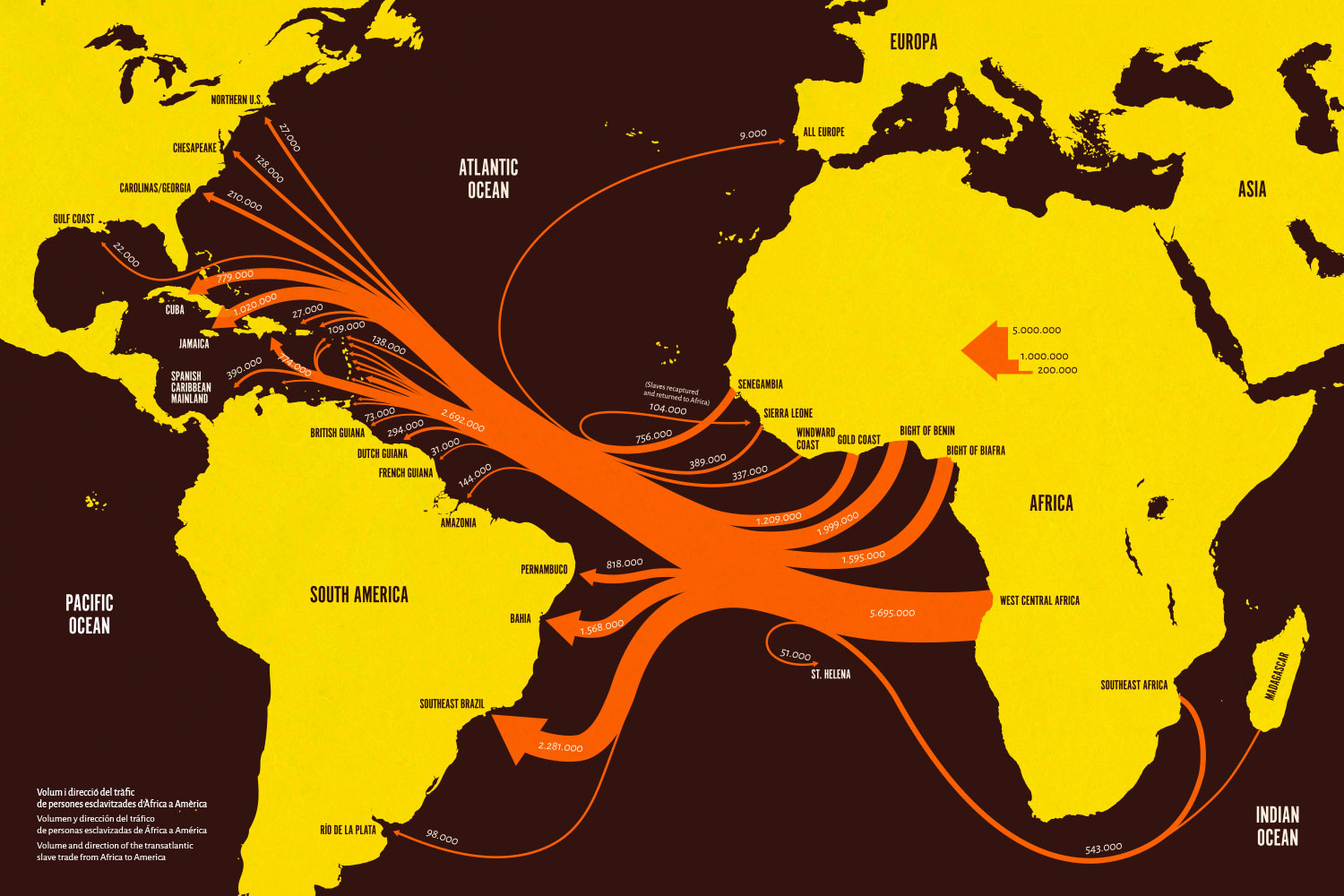
Between the 16th and 19th centuries, more than 12.5 million people born in Africa were shipped to the American continent. Spain became the fourth largest player in this macabre ranking: the major slave-trading ports of southern Europe were Seville and Lisbon until the 17th century, and Cádiz and Lisbon during the 18th and 19th centuries. It is estimated that ships owned by European or North American traders transported around 2,072,000 people to Spanish America. Of that total, Spanish vessels are believed to have transported approximately 1,600,000, and nearly 1,000,000 of them ended up enslaved in Cuba.
VOLUME I DIRECTION OF THE TRAFFICKING OF ENSLAVED PEOPLE FROM AFRICA TO AMERICA
The capture of people
at African factories
The process began either with capture or war. Local or foreign traffickers seized young people — men, women, and children — and brought them to the African coast, where factories, also known as trading posts, were located: compounds that included a residence for the factor and his staff, a goods warehouse, and several barracks where the captured people were held in chains until they were sold and put on ships.
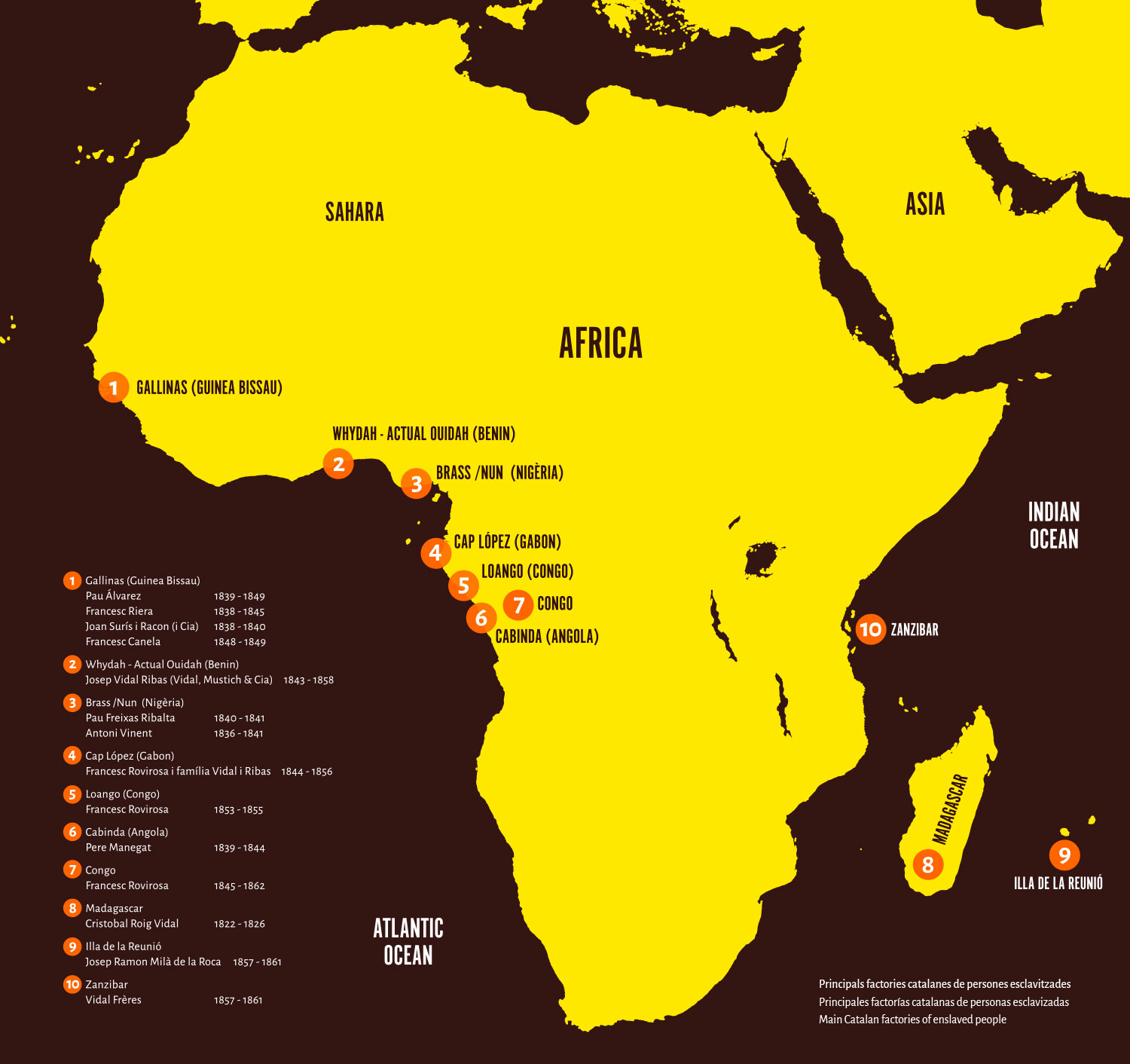
Researchers have identified 63 factories owned by Spaniards, including several Catalans. Among the Catalan traffickers who owned or managed factories on the African coast were José de Bérriz, Francesc Canela, Pau Freixas Ribalta, Pere Manegat, Domènech Mustich, Pere Sala, Francesc Riera, Cristòfol Roig Vidal, and Bonaventura Vidal Calzada.
MAIN CATALAN TRADING POSTS FOR ENSLAVED PEOPLE
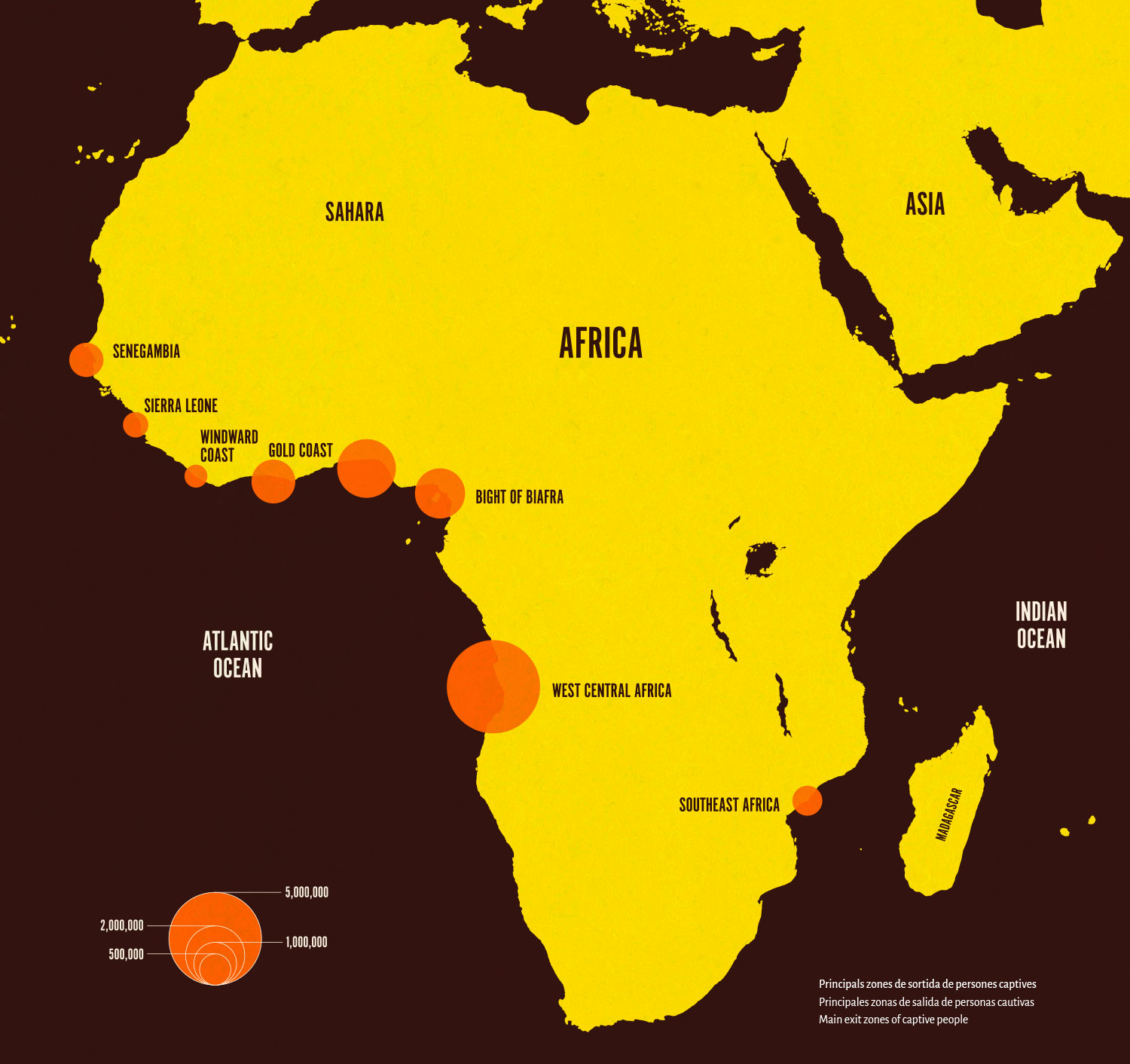
MAIN DEPARTURE AREAS FOR CAPTIVE PEOPLE
Currency objects
In sub-Saharan Africa, minted currency was not introduced until relatively modern times, largely driven by colonial governments. For commercial exchange, it was very common to use various items such as salt, fabrics, weapons, shells, precious metals, and metal objects of all kinds. When the Catalans joined the slave trade, in Río de la Plata from 1789 and in Cuba from 1810, transactions were usually paid for in silver coins, cowries and certain goods such as fabrics, gunpowder and rifles.
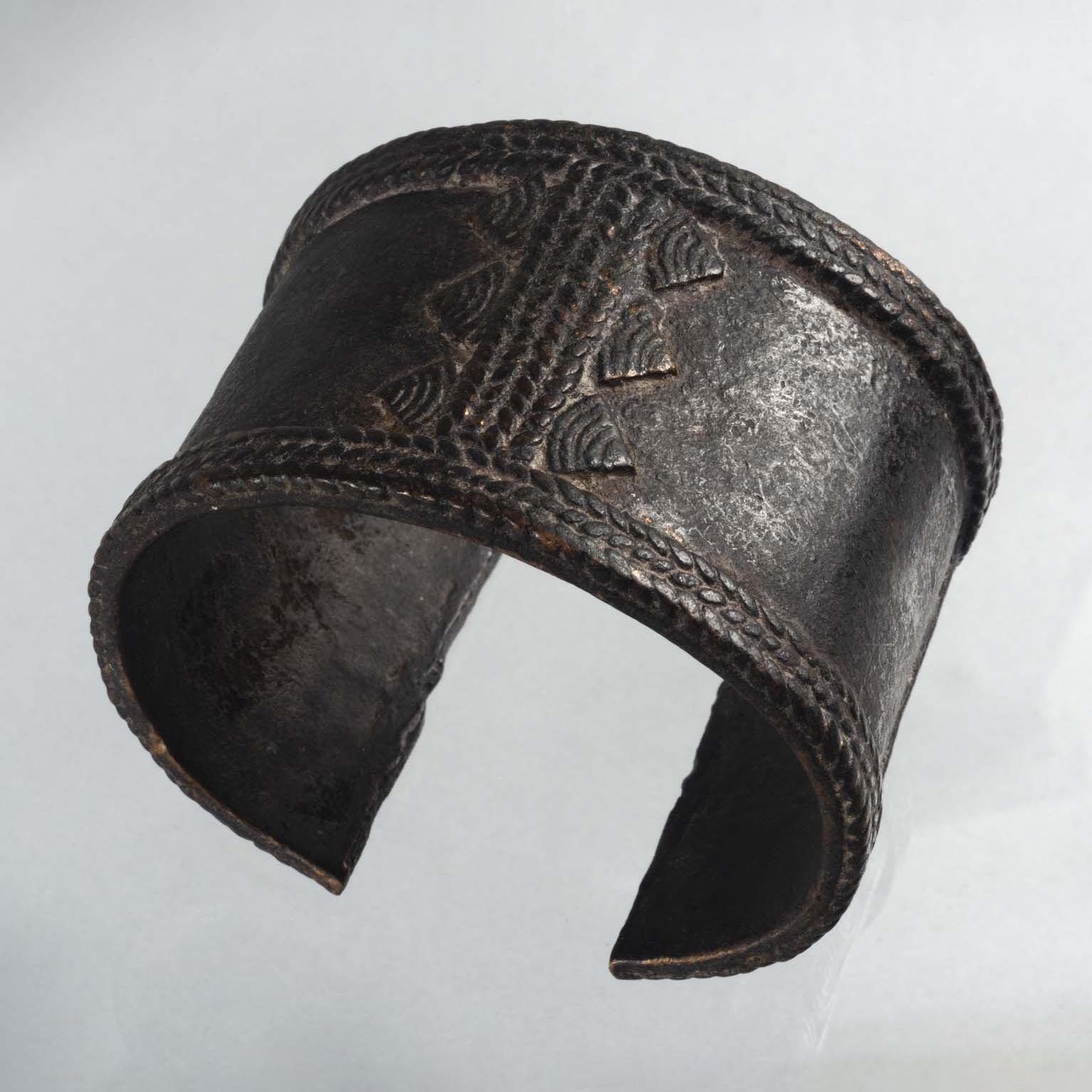
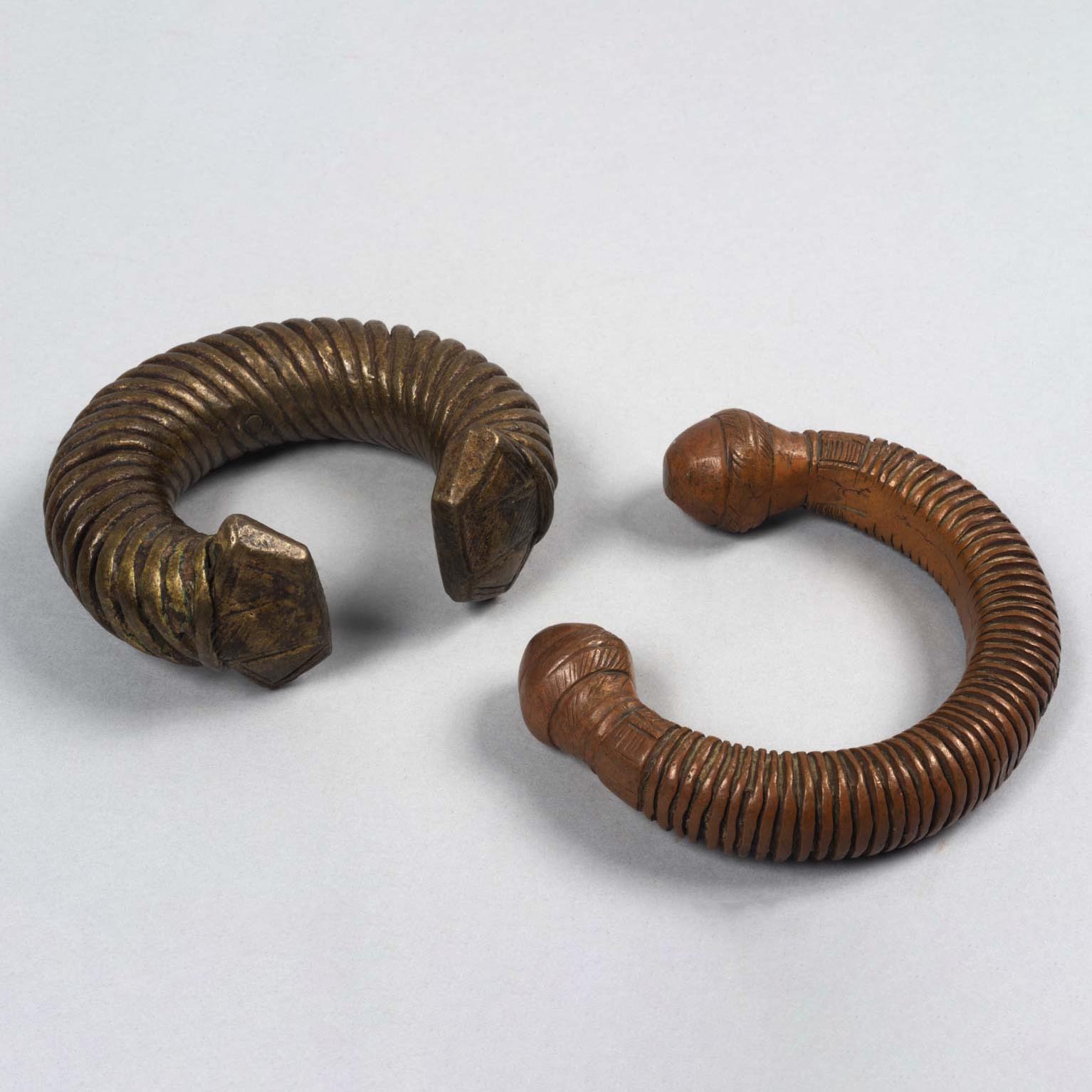
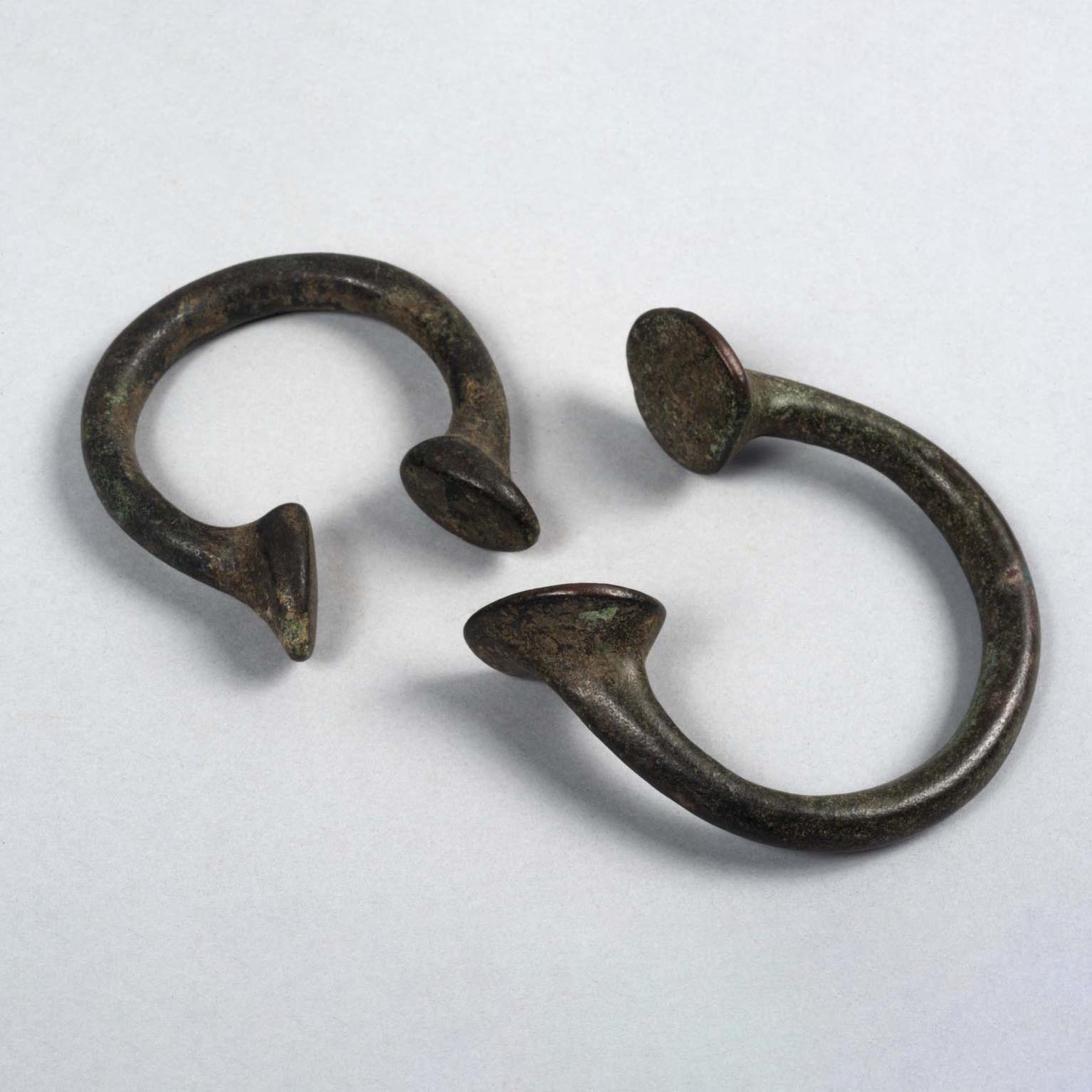
Handcuffs
These handcuffs were generally made of copper or bronze and manufactured in Europe from the end of the 15th century onwards, primarily to buy people enslaved on the African coast.
Javier Aznar’s private collection
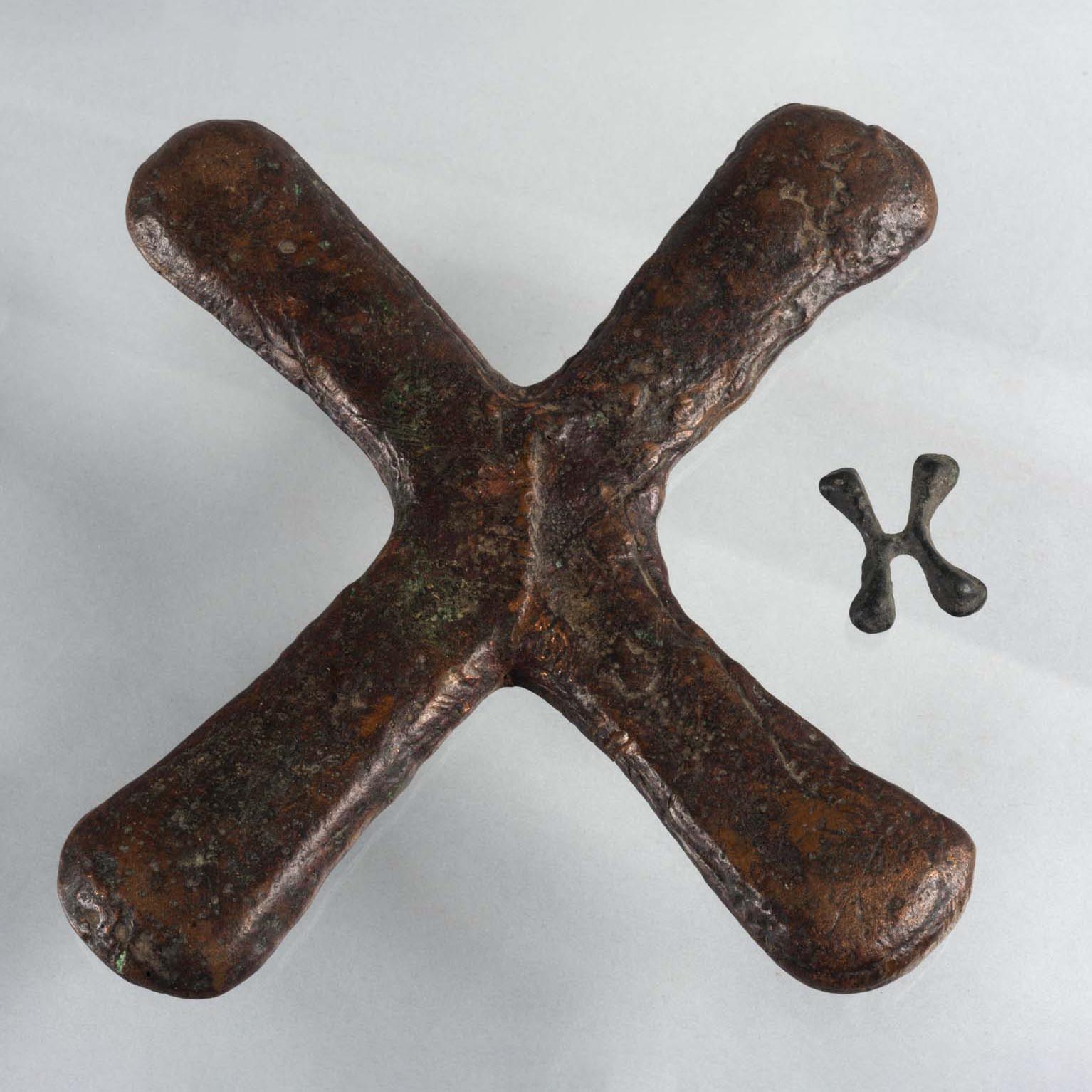
Katanga Crosses
The Katanga crosses were a widespread form of Congolese coinage consisting of copper or bronze ingots cast in the shape of a cross that remained in use until the beginning of the 20th century.
Javier Aznar’s private collection
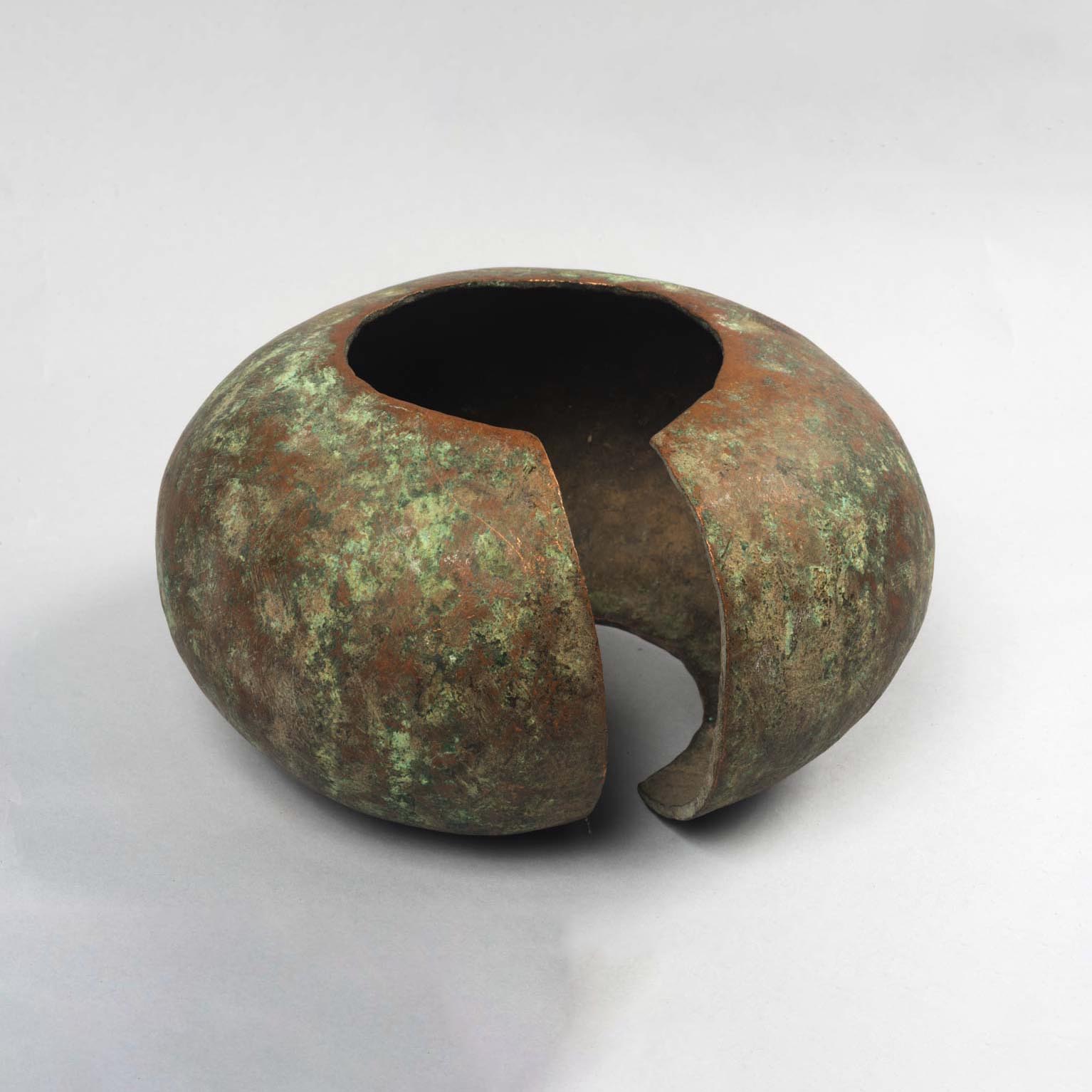
Anklets
Large bronze anklets called konga were used by the wealthy women of certain villages in the Congo and Zaire, and had also served as currency. Various diameters were made for the latter purpose.
Javier Aznar’s private collection
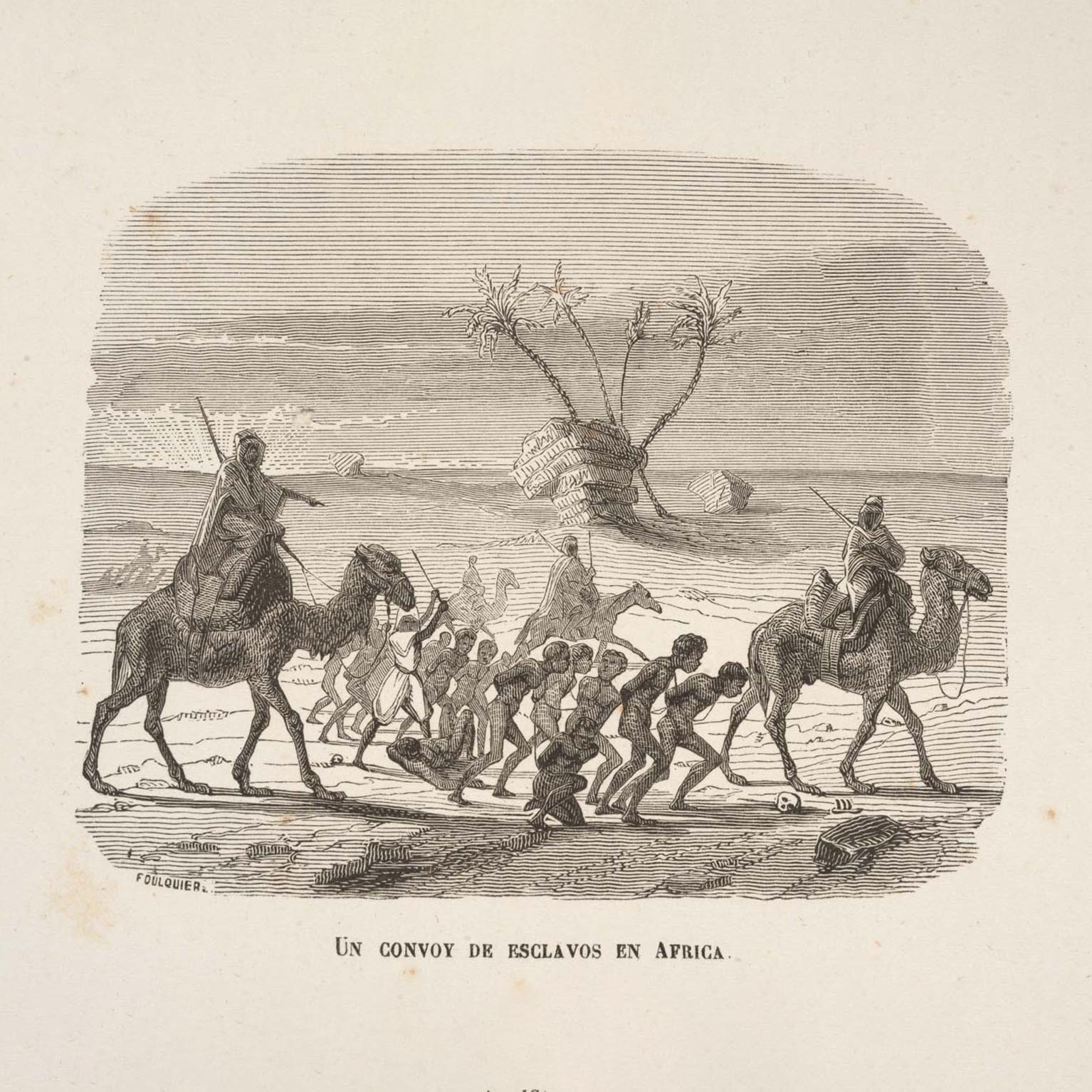
Un convoy de esclavos en África (A slave convoy in Africa)
Engraving by Jean-Antoine-Valentin Foulquier (1822 – 1896).
MMB
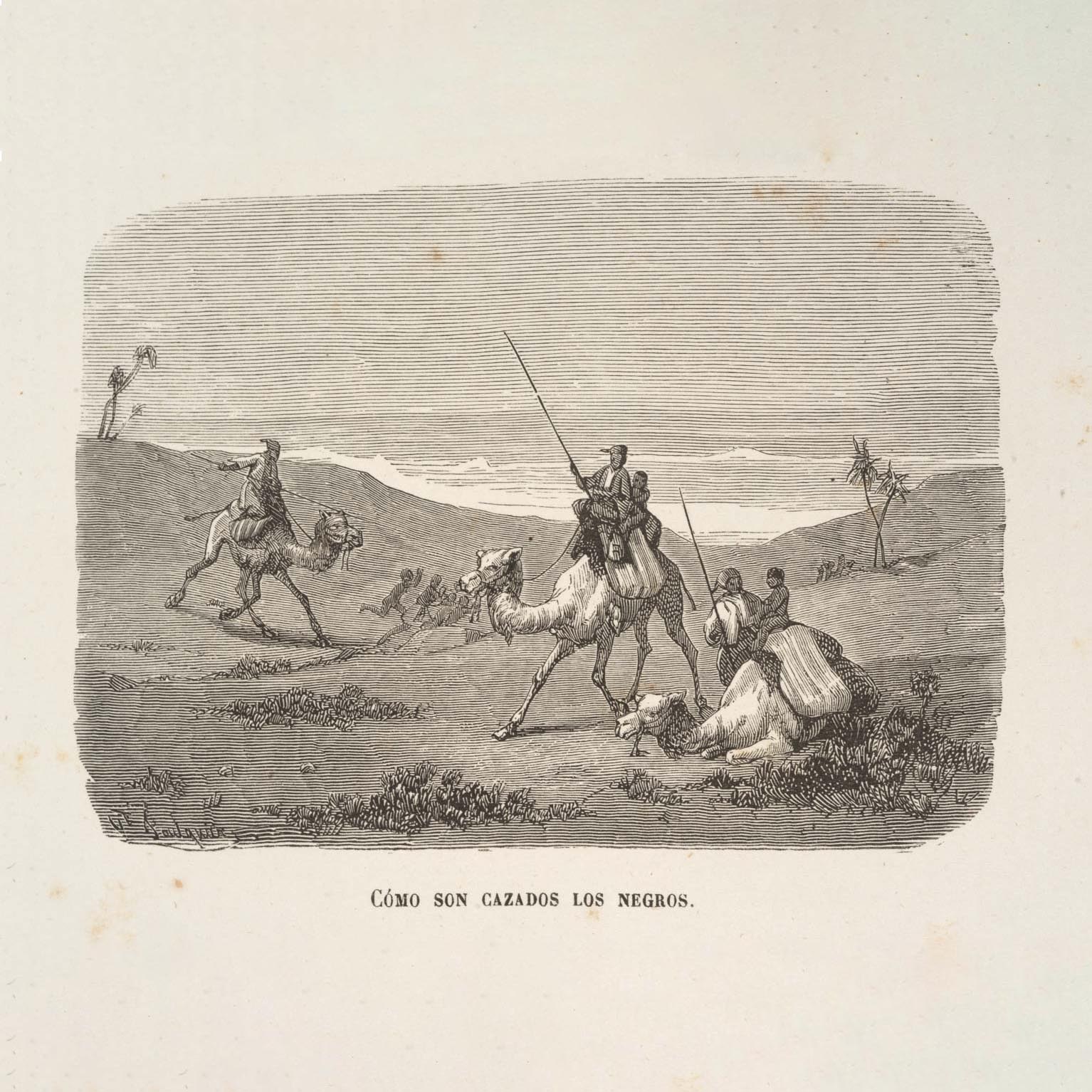
Cómo son cazados los negros (How black people are hunted)
Engraving by Jean-Antoine-Valentin Foulquier (1822 – 1896).
MMB
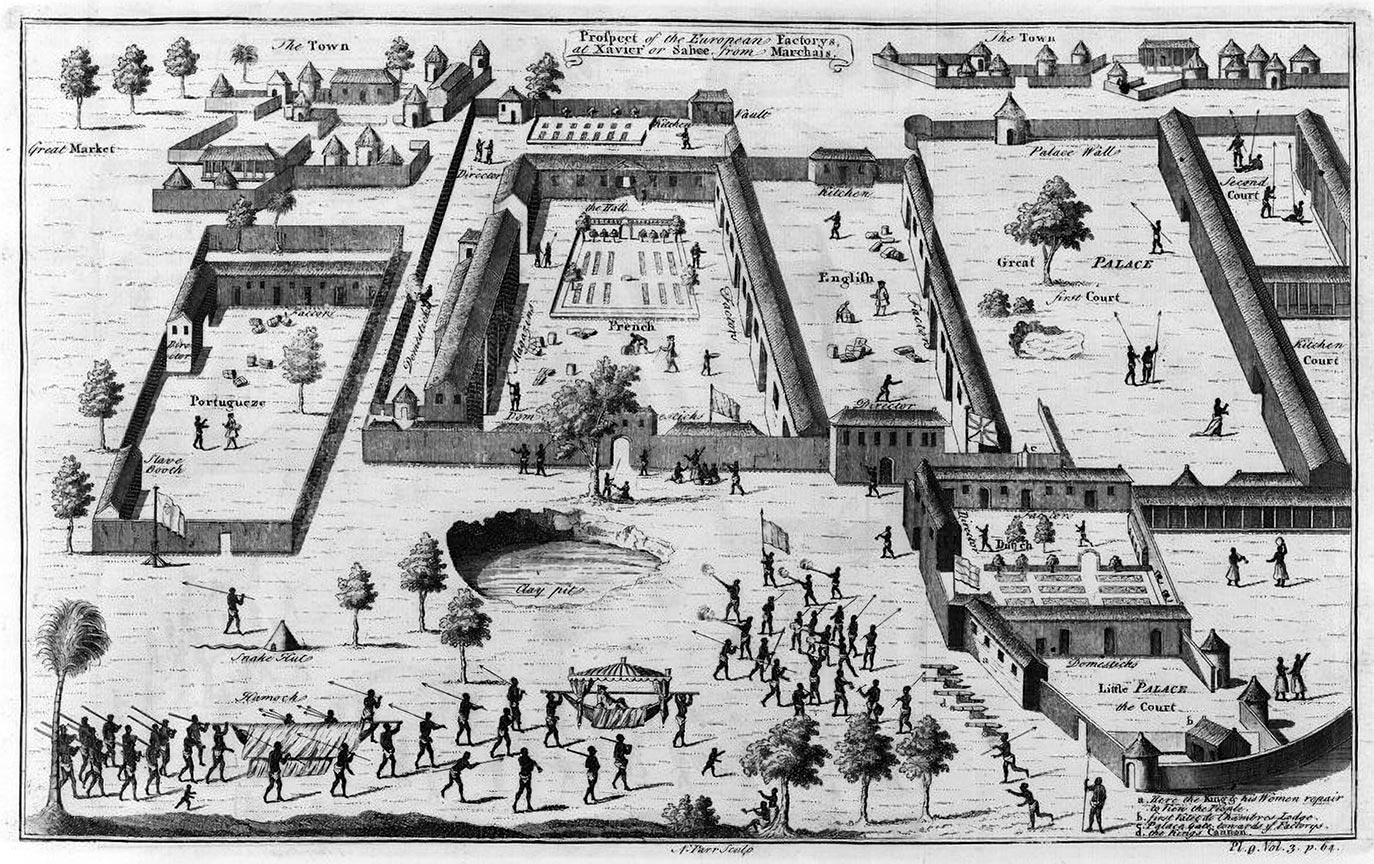
Slave factory in the Gulf of Guinea, now part of Nigeria.
Sketch by Nathaniel Parr, 1746.
Library of Congress, USA
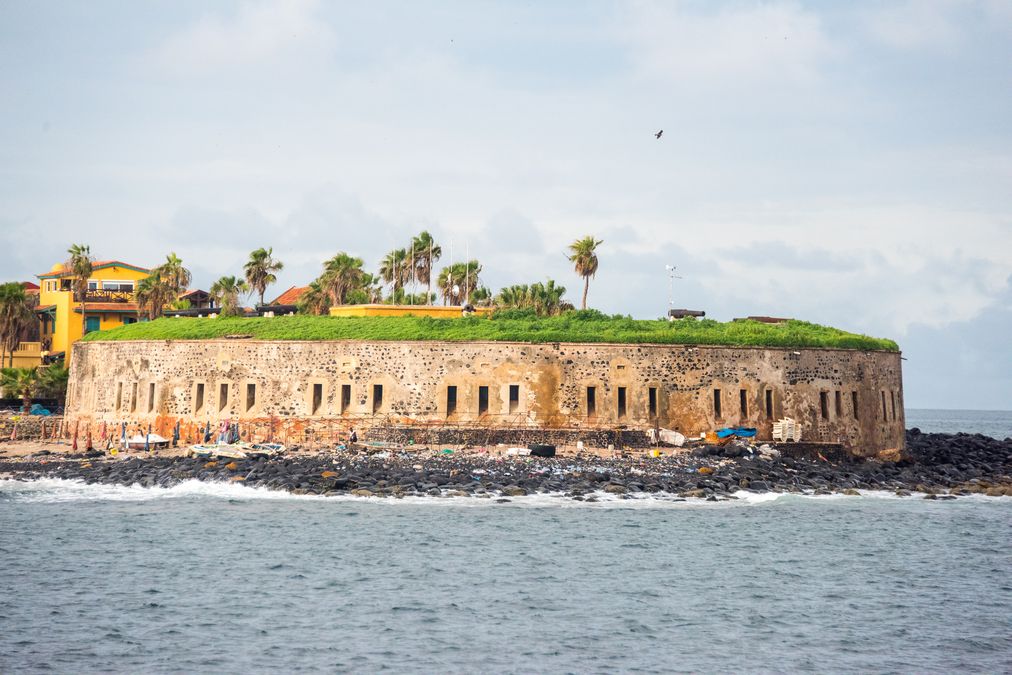
The House of Slaves, Gorée Island, Senegal.
The House of Slaves (Maison des Esclaves) has been a museum since 1962 and is a reminder of where enslaved people left the African continent.
Photo by Sergio Amati (2022)
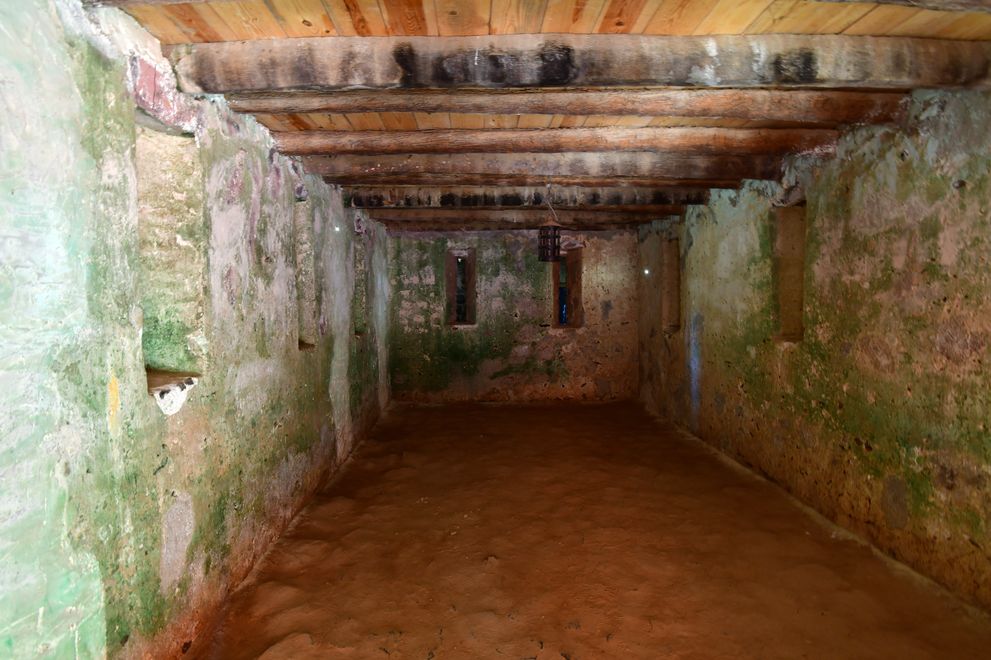
Inside the House of Slaves, Gorée Island, Senegal.
Photo by Michele D’Amico
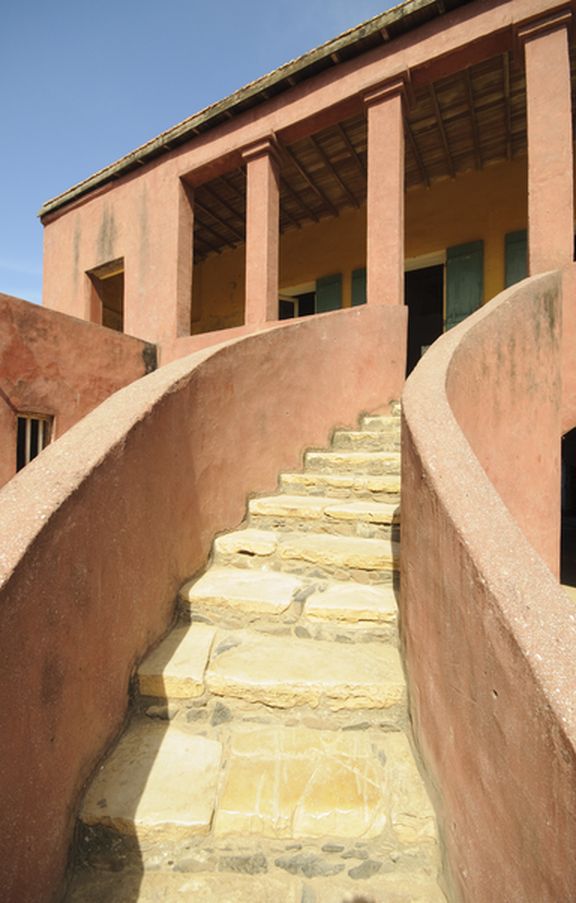
Inside the House of Slaves, Gorée Island, Senegal.
Photo by Robert Harding.