The Great Colonial Business
A large part of the wealth of the Catalan bourgeoisie — which invested in infrastructure, founded banks and companies, erected buildings, and promoted cultural institutions — came from the exploitation of enslaved labour in the colonies, especially in Cuba and Puerto Rico, or, directly, from the trafficking of people between Africa and the American colonies.
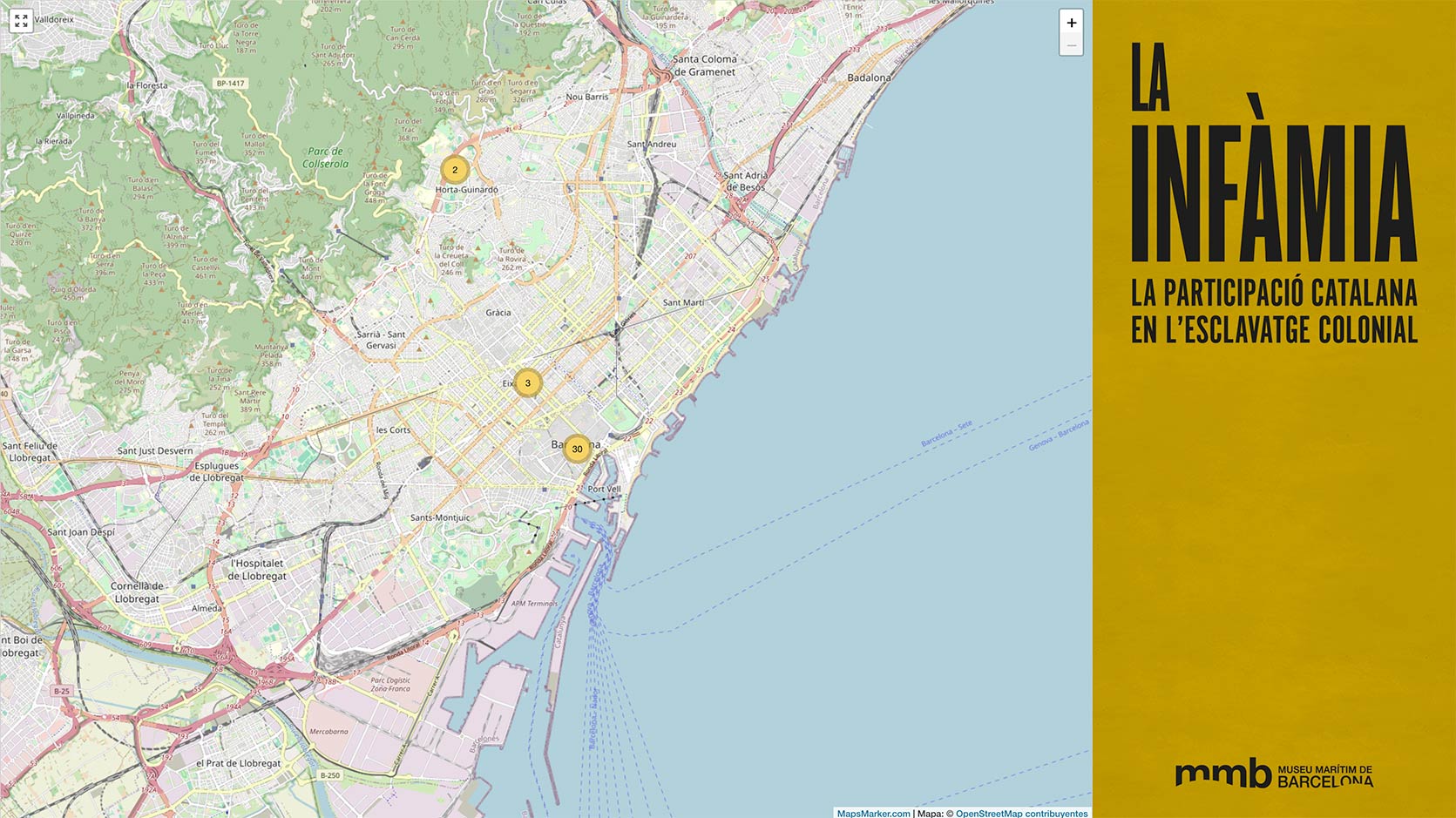
Take, for example, all the buildings erected in Barcelona during this period: we now know that part of the capital invested in them came from these sources. Explore this Barcelona and uncover this legacy.
Between the 16th and 19th centuries, more than 12.5 million people were captured in Africa and forcibly shipped to the American colonies. All colonial powers took part. In 1789, King Charles IV authorised all Spanish subjects, as well as merchants of any nationality, to engage in the slave trade with Spain’s American colonies. From that point on, hundreds of merchants and sailors from the Basque Country, Cantabria, Catalonia, and across peninsular Spain — as well as from the Balearic and Canary Islands — joined this highly lucrative business, which had long been practiced from Europe’s main ports.
In the Spanish colonies, the trafficking of people remained legal until 1820. From 1821 onwards, it was officially banned — but the use of enslaved labour remained legal. Despite the prohibition, the trafficking of people persisted, enabled by a network of interests and corruption between the business world and colonial authorities, who turned a blind eye.
It is very difficult to determine how many Catalans were involved in this shameful trade, as human trafficking was always a transnational and opaque activity. Current research suggests that ships sailing under the Spanish flag transported nearly one million people to the Americas who would end up enslaved.
We know of several Catalan captains who commanded slave ships to the Americas: Josep Carbó, from Sant Feliu de Guíxols; Agustí Conill Sala, from Lloret; Esteve Gatell Roig, from Torredembarra; Joan and Pere Mas Roig, from Vilassar de Mar; Josep Mataró Domènech, from Lloret; Jaume Tintó Miralles, from Barcelona; and Miquel Oliver Moll, Gaspar Roig Llenas, and Eugeni Viñes Castellets.
Among the Catalan shipowners who organised slave-trading expeditions were Josep Canela Raventós, Marià Flaquer, Pere Gil Babot, Isidre Inglada, Josep Pie Parellada, Salvador Samà, Jaume Tintó Miralles, Jaume Torrents Serramalera, Josep Antoni Vidal Pasqual, and Jaume Vilardebó.
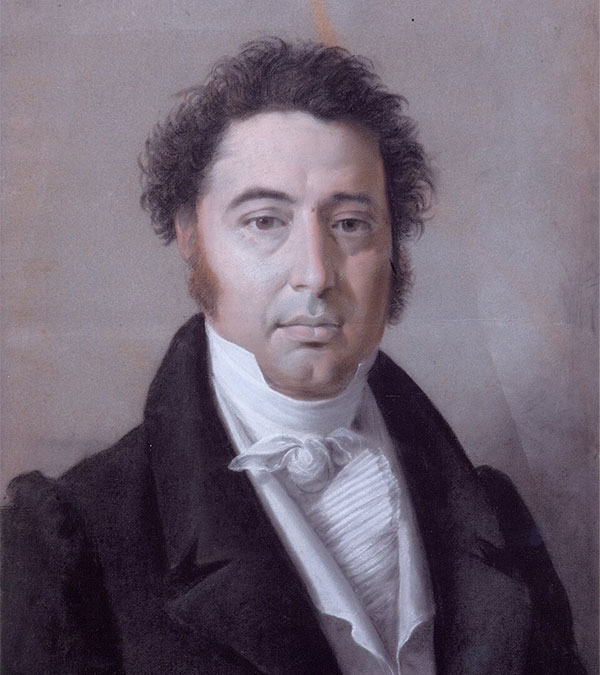
Pere Gil i Babot
(Tarragona, 1783 – Barcelona, 1853) was a merchant, businessman, banker, patron and art collector, Member of Parliament for several terms and founder of the Catalan Society for Gas Lighting (SCAG). He was involved in various businesses, including the export of wines and spirits, the import of sugar, cotton and cocoa, the trafficking of enslaved people, the occasional transport of soldiers and passengers between Spain and America, and privateering, as he had a letter of marque to capture enemy ships.
Portrait painted by Vicente Rodes y Aries (Alicante, 1783 – Barcelona, 1858), belonging to the collections of the National Art Museum of Catalonia (MNAC).
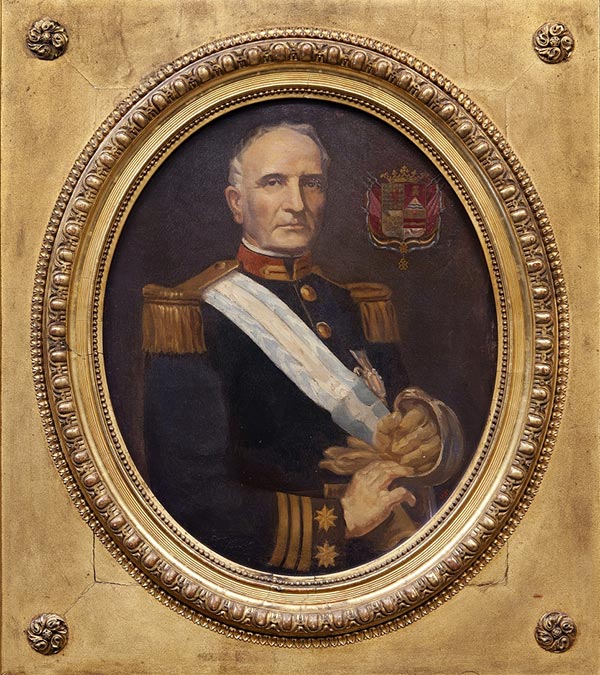
Salvador Samà i Martí
(Vilanova i la Geltrú, 1797 – Havana, 1866) arrived in Cuba in 1810 to join the family business of his uncles Pau and Josep Samà i Parès. He amassed a great fortune by trafficking enslaved people, while also achieving a high position on the social ladder: he became mayor of Havana, was appointed senator of the Kingdom of Spain and, in 1860, queen Isabel II awarded him the title of Marquis of Marianao as a reward.
Posthumous portrait by Josep Margalef Palacín (Huesca, 1900- Barcelona, 1985). MMB
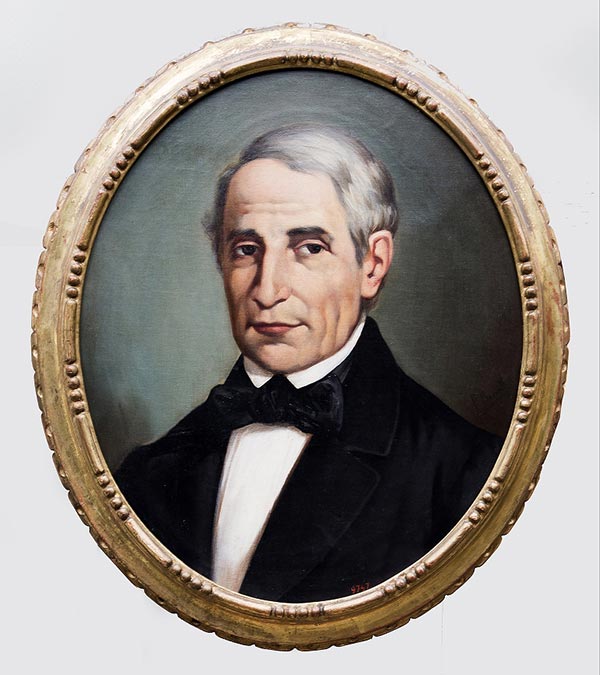
Jaume Torrents i Serramalera
(Moià, 1796 – Barcelona, 1854) was a businessman and shipowner who had settled in Cuba from a very young age. He assembled a fleet of at least eight sailing vessels, some of which took part in the trafficking of enslaved people, such as the frigates Diógenes and La Primera de Cataluña, and the brig Emprendedor, vessels for which we have documented voyages between 1828 and 1837. After returning to Barcelona in 1838, he moved into the mansion that today houses the Ateneu Barcelonès, and continued to manage his fleet engaged in trade along the tasajo route, while making major investments in infrastructure such as the Barcelona–Mataró railway, inaugurated in 1848, and openly expressing a staunch defense of slavery.
Posthumous portrait by Pere Borrell del Caso (Puigcerdà, 1835 – Barcelona, 1910). MMB
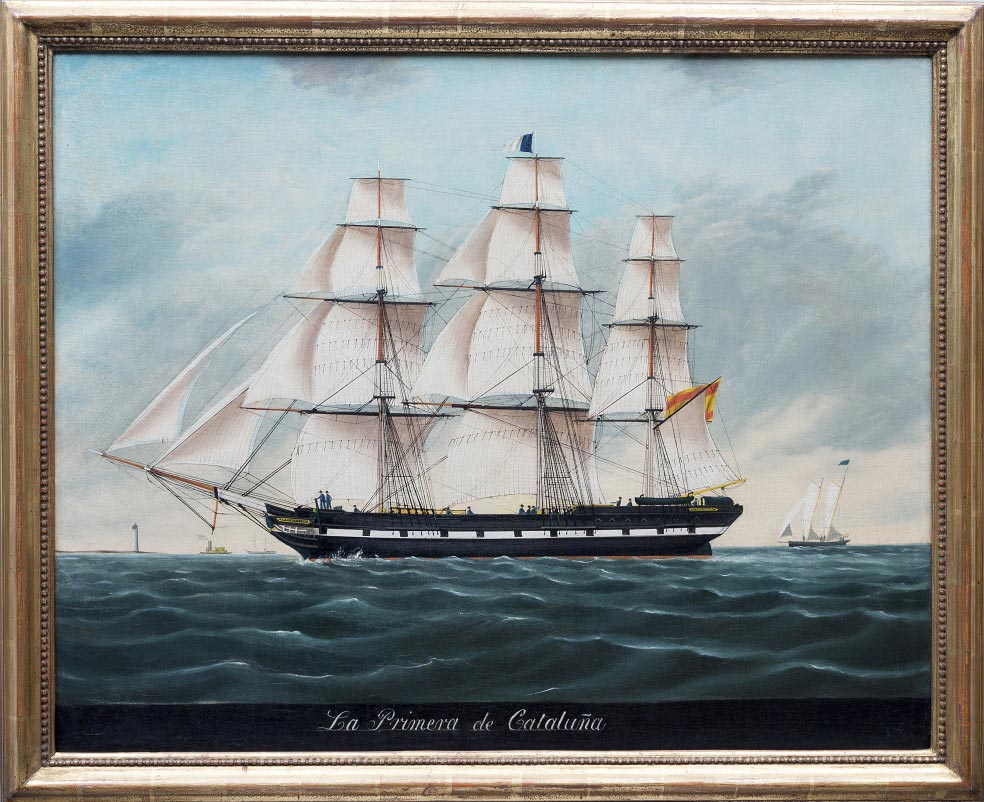
Frigate La Primera de Cataluña.
Built in San Francisco (USA) and registered in Havana in 1846, she was registered at the Barcelona Maritime Registry as the property of Jaume Torrents Serramalera in 1849. She was wrecked on the Cayo Verde (Cuba) on 9 January 1855.
Oil on canvas by James Guy Evans, ca. 1849-1855.
MMB
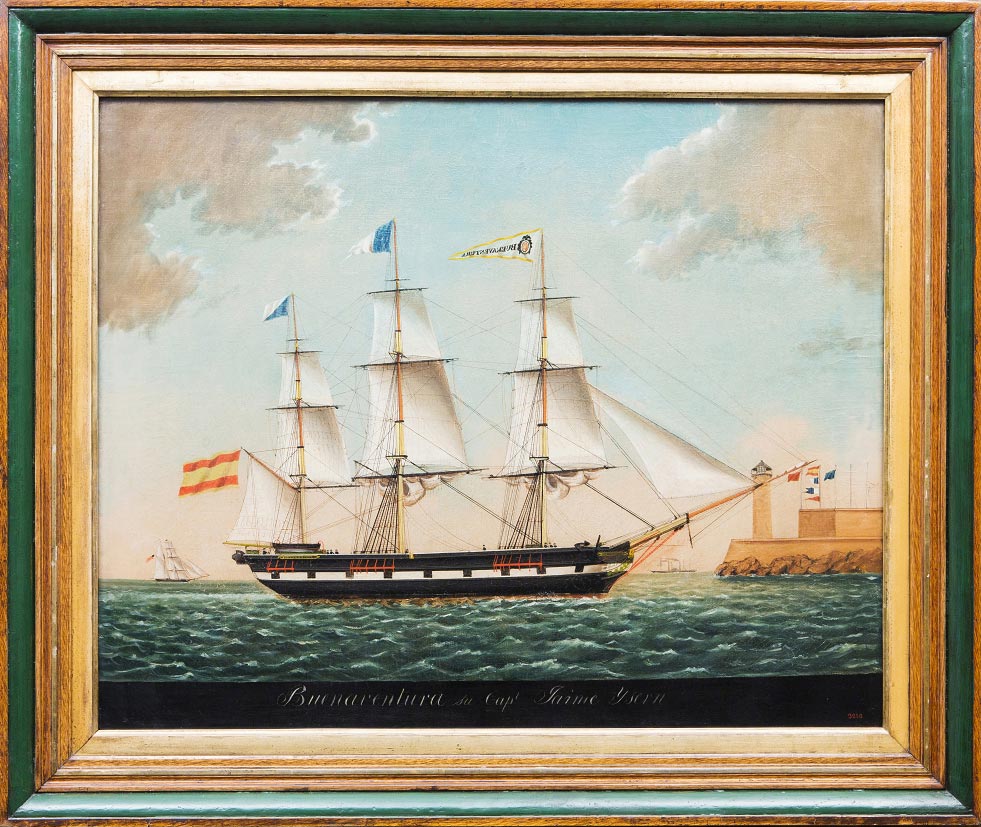
Frigate Buenaventura, Captain Jaime Isern
Built in Mataró by shipwright Francisco Segarra, she was registered at the Barcelona Maritime Registry in 1865 as the property of D. Salvador Samà, of the Havana trade. In 1867 she was sold to the Havana firm of Samà, Sotolongo y Cª.
Oil on canvas by James Guy Evans, s.d.
MMB
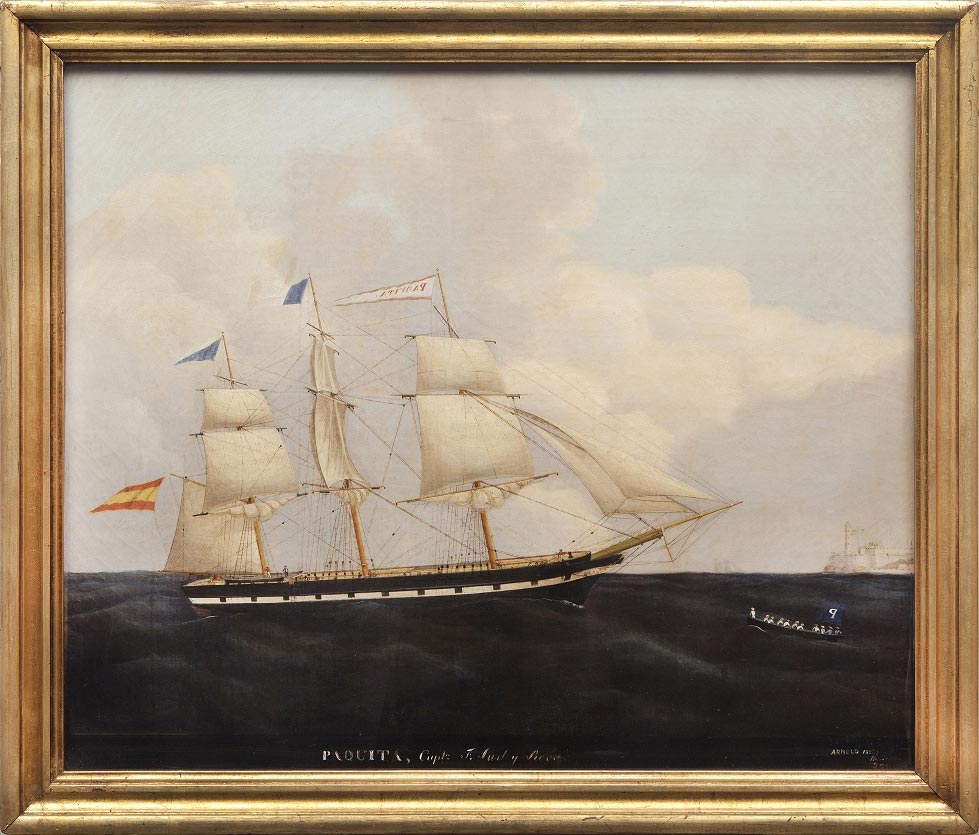
Frigate Paquita Captn F. Sust y […]
Registered at the Barcelona Maritime Registry, she was owned by the firm Samà, Sotolongo y Cª and sold to another shipping company in 1867.
Oil on canvas by Edward Everard Arnold, 1859
MMB
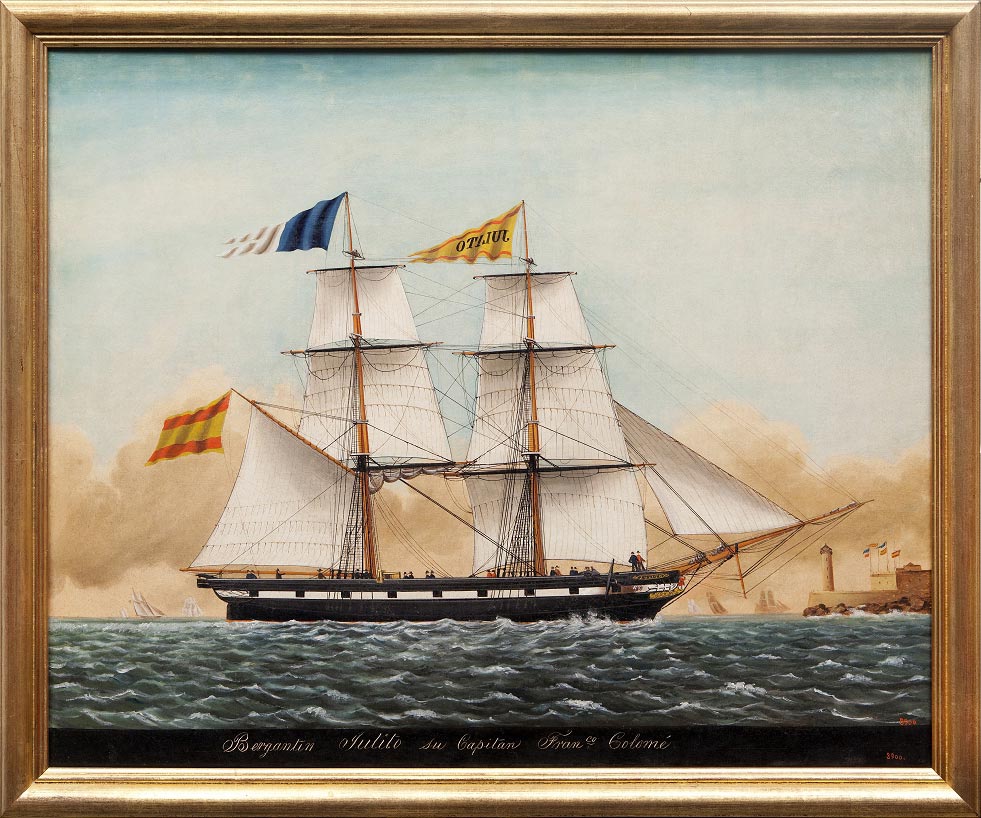
Built in Blanes in 1848, she was owned by Samà Hermanos, of the Havana trade, as recorded in the1st list of Havana vessels. In 1883 she was sold to Samà, Sotolongo y Cª. On 23 June 1879 she is recorded as rigged as a brigantine. She was broken up at Villajoyosa in 1886.
Oil on canvas by James Guy Evans, ca. 1847–1859.